Excellent presentation of the core ideas of Dr. Lobaczewski's ground-breaking work. I heartily recommend all of
Time for a Change's articles found at
Democratic Underground. Oh yeah. The trolls did come out for, but the DU folks are a wise bunch. The critters didn't really get up to much of anything and have since slunk off.
Blue Ibis
~~~~~~~~~~~~~~~~~~~~~~~~~~~~~~~~~~~~~~~~~~~~~~~~~~~~~~~~~~~~~~~~~~~~
How Societies Regress to Become Pathocracies Time for Change
sott.net
Fri, 11 Apr 2008 10:10 EDT
 |
| ©Red Pill Press |
| ponerology.com |
A pathocracy is a social movement, society, nation, or empire wherein a small pathological minority takes control over a society of normal people. The pathological minority habitually perpetrates evil deeds on its people and/or other people.
Almost everyone knows that pathocracies have been responsible for tremendous death and destruction throughout history. What less people are willing to acknowledge is that pathocracies continue to perpetrate death and destruction today. Billions of people throughout the world live in perpetual poverty and hunger or lack access to safe water, despite the fact that the resources exist to provide adequate food and safe water to all of the world's citizens. Millions of others are perpetually exposed to the horrors of war.
Therefore, it would behoove us all to understand how pathocracies develop and perpetrate their damage, and how to recognize them. A book on that subject, titled Political Ponerology - A Science on the Nature of Evil Adjusted for Political Purposes, was written by Andrew M. Lobaczewski. Lobaczewski, a psychiatrist, began the research that eventually led to the book more than half a century ago, in collaboration with other researchers, all who are all now dead. The research was conducted in secret, as the researchers were all victims of Joseph Stalin's totalitarian regime, which obviously provided fodder for much of the book's content.
I've previously posted twice on DU on this subject, drawing heavily from Lobaczewski's book. My first post was titled "Political Ponerology: A Science of Evil Applied for Political Purposes". In that post I discussed human evil and its effects, why many people find evil so difficult to recognize, and psychopaths in position of great power.
In my second post on the subject, titled "The Role of Ideologies in the Development of Evil Regimes (Pathocracies)", I briefly summarized the first post and emphasized the role of ideology in the development of pathocracies. The main thing to understand about that is that the ideology serves as a mask, to hide the actual intentions of the group, and as a motivational factor for group members. Lobaczewski explains:
Human nature demands that vile matters be haloed by an over-compensatory mystique in order to silence one's conscience and to deceive consciousness and critical faculties, whether one's own or those of others. If such a ponerogenic union could be stripped of its ideology, nothing would remain except psychological and moral pathology, naked and unattractive. Such stripping would of course provoke "moral outrage", and not only among the members of the union.
In this post I go into much more detail about the development of pathocracies (referred to in Lobaczewski's book as the ponerogenic process). Since much of the material in the book is somewhat abstract, my goal here is to relate the principles he discusses to current day (and past) examples, in order to help make them more understandable. Lobaczewski speaks both in terms of small group processes and large scale (macrosocial) processes. It seems that most of the basic principles are similar regardless of the scale of the process.
An overview of the development of pathocracy
I thought it best to start with an overview and then come back to the specifics. This is what Lobaczewski has to say about the general process of a society regressing into a pathocracy:
Disparagement of one's "inferiors"
Children of the privileged classes learn to repress from their field of consciousness the uncomfortable ideas suggesting that they and their parents are benefiting from injustice against others. Such young people learn to disqualify and disparage the moral and mental values of anyone whose work they are using to over-advantage.
When you read this, think of the slave masters who justified their treatment of their slaves by explaining to their children that white supremacy over black people is natural because black people are inherently inferior or uncivilized. And think of the fact that the deaths of over a million Iraq civilians resulting from our invasion and occupation of their country have barely entered our national discussion. Some Harvard economists explain the long-lasting effects of racism in our country with respect to current economic policies:
Racial discord plays a critical role in determining beliefs about the poor. Since minorities are highly over-represented amongst the poorest Americans, any income-based redistribution measures will redistribute particularly minorities. The opponents of redistribution have regularly used race based rhetoric to fight left-wing policies... America's troubled race relations are clearly a major reason for the absence of an American welfare state.
Growing hysteria
Lobaczewski continues his description of the initial stages of developing pathocracy:
Young minds thus ingest habits of subconscious selection and substitution of data, which leads to a hysterical conversion economy of reasoning. They grow up to be somewhat hysterical adults who... transmit their hysteria to the next generation... The hysterical patterns for experience and behavior grow and spread downwards from the privileged classes until crossing the boundary.
Does that remind you of the state of Congress under Republican rule, and the general attitude of radical conservatives? Alan Wolf describes the mood of conservatives over the last couple of decades:
Conservatives have viewed politics as an extension of war, complete with no-holds barred treatment of the enemy, iron-clad discipline in the ranks, cries of treason against those who do not support the effort with full-throated vigor, and total control over any spoils won.
Contempt for truth and objective thinking
Lobaczewski continues:
When the habits of subconscious selection and substitution of thought-data spread to the macrosocial level, a society tends to develop contempt for factual criticism and to humiliate anyone sounding an alarm. Contempt is also shown for other nations which have maintained normal thought-patterns and for their opinions.
Think about the how radical conservatives disparage the patriotism of anyone who disagrees with our current imperial course. Think about the firing of Phil Donohue for daring to criticize the invasion of Iraq. Think about the aggressive targeting of Cynthia McKinney's House seat for daring to question George Bush's handling of the 9-11 attacks on our country. Think about the muzzling of Sybil Edmunds. Think about "freedom fries". Think about George Bush's war on science. And think about how so many subjects are barely mentionable in our country today.
The disintegration of societyNeoo
Lobaczewski's description of societal disintegration under pathocracies reminds me of the ever expanding income gap in our country, and should serve as a warning that things can get a whole lot worse for us than they are now:
The feeling of social links and responsibility toward others disappear, and the society in question splinters into groups ever more hostile to each other... This opens the door for activation of the pathological factors of a various nature to enter in... A huge bloody tragedy can be the result....
Individual psychopath
Now let's consider the process from the standpoint of the individual psychopath. Laura Knight-Jadczyk, the editor of Lobaczewski's book, quotes Martha Stout, noting that the defining characteristic of a psychopath is a lack of conscience:
Imagine - if you can - not having a conscience, none at all, no feelings of guilt or remorse no matter what you do, no limiting sense of concern for the well-being of strangers, friends, or even family members. Imagine no struggles with shame, not a single one in your whole life, no matter what kind of selfish, lazy, harmful, or immoral action you had taken. And pretend that the concept of responsibility is unknown to you, except as a burden others seem to accept without question, like gullible fools.
The defining talents of the average psychopath
Most psychopaths don't have much general intelligence or even any particular skills of a productive nature. But the ones who pose great danger to society are quite good at manipulating people and political infighting. Lobaczewski explains:
Once the process of poneric transformation... has begun and advanced sufficiently, they perceive this fact with almost infallible sensitivity: a circle has been created wherein they can hide their failings and psychological differentness, find a world where they are in power and all those other, "normal people", are forced into servitude.
This reminds me of a biography of Joseph Stalin. One by one, over a period of several years, he isolated and the eliminated all of his minions who posed the slightest danger to his unchallengeable power. So by 1937 Stalin's purges had eliminated all of the original Russian Communist Party but himself.
The role of sycophancy
Can you imagine John Yoo, Alberto Gonzales, or David Petraeus going against the will of GeCorge Bush on any matter? Of course not. Their positions of high power depend entirely on putting all their energy into anticipating the needs of and pleasing the "leader". George Bush started out the same way. As governor of Texas, all his efforts went into pleasing his corporate cronies. In return, they rewarded him handsomely by ensuring his material wealth and serving as a power base for his climb to the presidency. Lobaczewski describes the process:
They initially perform subordinate functions in such a movement and execute the leaders' orders, especially whenever something needs to be done which inspires revulsion in others. GTheir evident zealotry and cynicism gives rise to criticism on the part of the union's more reasonable members, but it also earns the respect of some its more extreme revolutionaries. They thus find protection among those people who earlier played a role in the movement's ponerization, and repay the favor with compliments or by making things easier for them. Thus they climb up the organizational ladder, gain influence, and almost involuntarily bend the contents of the entire group to their own way of experiencing reality and to the goals derived from their deviant nature.
Psychopaths after they've climbed to the pinnacle of power
Lobaczewski explains that psychopaths always feel terribly insecure, even after they've climbed to the pinnacle of power:
The pathological social structure gradually covers the entire country, creating a "new class" within the nation. This privileged class of deviants feels permanently threatened by the "others", i.e. by the majority of normal people. Neither do the pathocrats entertain any illusions about their personal fate should there be a return to the system of normal man.... Pathocrats never possessed any solid practical talent, and the time frame of their rule eliminates any residual possibilities of adapting to the demands of normal work. If the laws of normal man were to be reinstated, they and theirs could be subjected to judgment... they would be threatened by a loss of freedom and life, not merely a loss of position and privilege. Since they are incapable of any kind of sacrifice, the survival of a system which is the best for them becomes a moral imperative. Such a threat must be battled by means of any and all cunning and implemented with a lack of scruples with regard to those other "inferior" people that can be shocking in its depravity.
In other words, we should all be very worried about the lengths to which the Bush administration will go to ensure that either a Republican with benign intentions towards the Bush clique is installed as our next president or that no elections take place at all.
Turning reality upside down
As previously noted, psychopaths of any stripe or level of power cannot afford to allow others to perceive the reality of their character. Therefore, a prerequisite of attaining power is to throw everyone else into a state of confusion. Some of them are quite good at that. Lobaczewski explains:
Any human group affected by the process described herein is characterized by its increasing regression from... the ability to perceive psychological reality.... A ponerological analysis of this process indicates that pressure is being applied to the more normal part of the association by pathological factors present in certain individuals who have been allowed to participate in the group because the lack of good psychological knowledge has not mandated their exclusion....
An extensive and active indoctrination system is built, with a suitably refurbished ideology constituting the vehicle or Trojan horse for the purpose of pathogolizing the thought process of normal individuals and society. The goal - forcing human minds to incorporate pathological experiential methods and thought patterns, and consequently accepting such rule - is never openly admitted.
Thus it was that Hitler needed his Goebbels to indoctrinate the German people into a way of thinking that was conducive to Nazi attainment and maintenance of power. Thus it is that the Bush administration uses taxpayer money to provide us with propaganda disguised as news. And thus it is that we repeatedly hear "We have to fight them over there if we don't want to fight them here", while our confused and sycophantic corporate news media rarely challenges such inanely stupid assertions.
I often wonder if this phenomenon also partially explains why Congress is so reluctant to proceed with impeachment. Could it be that they are so confused or intimidated that they can't differentiate reality from the fairy tales spewed out by the Bush administration?
The marginalization and exclusion of normal people
Psychopaths cannot tolerate the presence of normal people because normal people are not at all conducive to their plans. Lobaczewski explains:
Rigorous selective measures of a clearly psychological kind are applied to new members. So as to exclude the possibility of becoming sidetracked by defectors, people are observed and tested to eliminate those characterized by excessive mental independence or psychological normality... Individuals manifesting doubt or criticism are subject to paramoral condemnation... Leadership discusses opinions and intentions which are psychologically and morally pathological....
A mysterious disease is already raging inside the union. The adherents of the original ideology feel ever more constricted by powers they do not understand; they start fighting with demons and making mistakes....
If such a movement triumphs by revolutionary means and in the name of freedom, the welfare of the people, and social justice, this only brings about further transformation of a governmental system thus created into a macrosocial pathological phenomenon. Within this system, the common man is blamed for not having been born a psychopath, and is considered good for nothing except hard work, fighting and dying to protect a system of government he can neither sufficiently comprehend nor ever consider to be his own. An ever-strengthening network of psychopathic and related individuals gradually starts to dominate, overshadowing the others. Characteropathic individuals who played an essential role in ponerizing the movement and preparing for revolution, are also eliminated. Adherents of the revolutionary ideology are unscrupulously "pushed into a counter-revolutionary position". They are now condemned for "moral" reasons in the name of new criteria whose paramoralistic essence they are not in a position to comprehend. Violent negative selection of the original group now ensues.... It remains characteristic for the entire future of this macrosocial pathological phenomenon.
Think about the Stalin purges, the Bush administration firing of any federal attorneys who wouldn't play ball with it, the resignations of high military leaders whose opinions were not in synch with George Bush, the firing of Phil Donohue, and the targeting of Cynthia McKinney. And more ominously, think about Paul Wellstone's plane crash, the assassination of JFK and Martin Luther King, and the "suicides" of J. H. Hatfield, Cliff Baxter, Raymond Lemme, David Kelly, Ted Westhusing and Gary Webb.
The response of normal individuals
Even though psychopaths are greatly outnumbered in the general population (about 4% - 6%), the development of pathocracies are an all too frequent phenomenon in world history. Clearly, normal individuals frequently fail to adequately counteract the problem. One of their biggest mistakes is to adopt an uncritical attitude towards psychopaths, as Lobaczewski explains:
Thus, whenever we observe some group member being treated with no critical distance, although he betrays one of the psychological anomalies familiar to us, and his opinions being treated as at least equal to those of normal people, although they are based on a characteristically different view of human, we must derive the conclusion that this human group is affected by a ponerogenic process and if measures are not taken the process shall continue to its logical conclusion.
As I've previously noted, exposure to psychopaths is frequently a very disorienting event for normal people. They can respond in one of three ways: adopt the alternate reality of the group; leave; or, remain confused and in a state of psychological terror. Lobaczewski describes the situation:
Once a group has inhaled a sufficient dose of pathological material to give birth to the conviction that these not-quite-normal people are unique geniuses, it starts subjecting its more normal members to pressure characterized by corresponding paralogical and paramoral elements. For many people, such pressure of collective opinion takes on attributes of a moral criterion; for others, it represents a kind of psychological terror ever more difficult to endure... Individuals with a more normal sense of psychological reality leave after entering into conflict with the newly modified group; simultaneously, individuals with various psychological anomalies join the group and easily find a way of life there.
What normal members of the group need
Lobaczewski explains what normal people need under such circumstances (and this applies for whole societies as well as small groups):
What they need is good psychological information in order to find the path of reason and measure. Based on a ponerologic understanding of their condition, psychotherapy could provide rapid positive results.
And I will add here that this is why so many of us DUers love people like Dennis Kucinich (who publicly told us the obvious but unmentionable reason for the Iraq War), Keith Olbermann, Naomi Klein, and Naomi Wolf. Many or most normal people sense that something terrible is happening, but they just can't bring themselves to acknowledge it even to themselves. But when some brave soul has the courage to announce that the emperor has no clothes after all, that helps to bring a sense of reality back to anyone who has the courage to listen. As an example, here is a quote from one of Keith Olbermann's special comments:
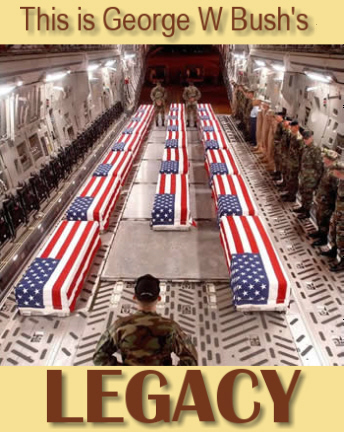
Were there any remaining lingering doubt otherwise... it ended yesterday when Mr. Bush commuted the prison sentence of one of his own staffers... In that moment, Mr. Bush, you broke that fundamental compact between yourself and the majority of this nation's citizens... you ceased to be the president of the United States... You became merely the president of a rabid and irresponsible corner of the Republican Party. And this is too important a time, sir, to have a commander in chief who puts party over nation. This has been, of course, the gathering legacy of this administration...
Our leaders in Congress ... must now live up to those standards which echo through our history: ... Impeach - get you, Mr. Bush, and Mr. Cheney, two men who are now perilous to our democracy, away from the helm.
The terror phase
As a society regresses to pathocracy, it is inevitable that at some point the majority of normal members of society will catch on. The salient question is whether they will do so before it is too late to prevent massive and irreparable harm. Lobaczewski explains this process:
The rejected majority and the very forces which naively created such power to begin with, start mobilizing against the block of psychopaths who have taken over. Ruthless confrontation with these forces is seen by the psychopathic block as the only way to safeguard the long-term survival of the pathological authority. We must thus consider the bloody triumph of a pathological minority over the movement's majority to be a transitional phase during which the new contents of the phenomenon coagulate. The entire life of a society thus affected then becomes subordinated to deviant thought criteria....
To mitigate the threat to their power, the pathocrats must employ any and all methods of terror and exterminatory policies against individuals known for their patriotic feelings. Individuals lacking the natural feeling of being linked to normal society become irreplaceable...
As an example, Naomi Klein, in The Shock Doctrine - The Rise of Disaster Capitalism, describes the terror that encompassed Chile in 1973 following the CIA sponsored overthrow of their president:
The generals knew that their hold on power depended on Chileans being truly terrified...The trail of blood left behind over those four days came to be known as the Caravan of Death. In short order the entire country had gotten the message: resistance is deadly... In all, more than 3,200 people were disappeared or executed, at least 80,000 were imprisoned, and 200,000 fled the country.
Nor was that the end of it. Over the next several months and years, anyone whose independent thoughts were considered to pose a danger to Pinochet's regime were systematically tortured or eliminated.
Why pathocracy cannot be permanent
Pathocracies cannot be permanent, because of their many inherent deficiencies. Lobaczewski explains:
The achievement of absolute domination by pathocrats in the government of a country cannot be permanent since large sectors of the society become disaffected by such rule and eventually find some way of toppling it. This is part of the historical cycle. Such a system of government has nowhere to go but down. In a pathocracy, all leadership positions must be filled by individuals with corresponding psychological deviations... However, such people constitute a very small percentage of the population and this makes them more valuable to the pathocrats. Their intellectual level or professional skills cannot be taken into account, since people representing superior abilities are even harder to find.....
Under such conditions, no area of social life can develop normally... Pathocracy progressively paralyzes everything. Normal people must develop a level of patience... pathocracy progressively intrudes everywhere and dulls everything. Thus, the pathological minority's attempts to retain power will be threatened by the society of normal people, whose criticism keeps growing....
The entire effort only results in producing a general stifling of intellectual development and deep rooted protest against hypocrisy. The authors and executors of this program are incapable of understanding that the decisive factor making their work difficult is the fundamental nature of normal human beings - the majority. The entire system of force, terror, and forced indoctrination, or, rather, pathologization, thus proves effectively unfeasible... Reality places a question mark on their conviction that such methods can change people in such fundamental ways so that they can eventually recognize this pathocratic kind of government as a normal state......
Pathocracies in perspective
But we should not take much satisfaction in the inevitable fall of pathocracies, since they so frequently do such tremendous harm before they fall. It would be far better if we could learn to prevent their rise in the first place.
One of the many great insights of the founders of our country is that they anticipated the rise of pathocracy in the nation that they founded. They therefore wrote into its Constitution numerous plans for the balancing of power and for the peaceful removal from office of chief executives or others who proved to put their own needs and desires above those of our nation.
It was a great idea. But it can only work to the extent that our elected government officials have the courage to open their eyes to the danger and take action against it, as so clearly prescribed in our Constitution. It is now long past the time that those with open eyes and minds should have seen and understood the gathering danger.
If our Congress fails to take the appropriate action, they'll have set a terrible precedent for our nation. In that event, even if our current government does not perpetrate substantially more harm to us before they leave, Congress will have left the door wide open for future governments to do so.
 GAAAAK. Here is a man(?) who thinks raining death and destruction down on millions of people is a legacy of greatness?????? And he was dreaming about how to do this TWO YEARS before 9/11? Where is the famous