Showing posts with label Psychopathic IDF. Show all posts

Saturday, August 29, 2009

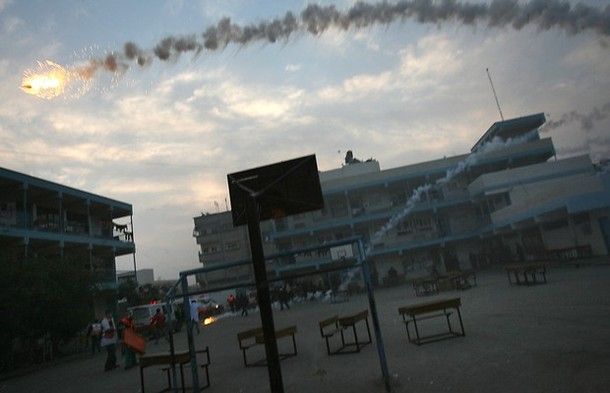
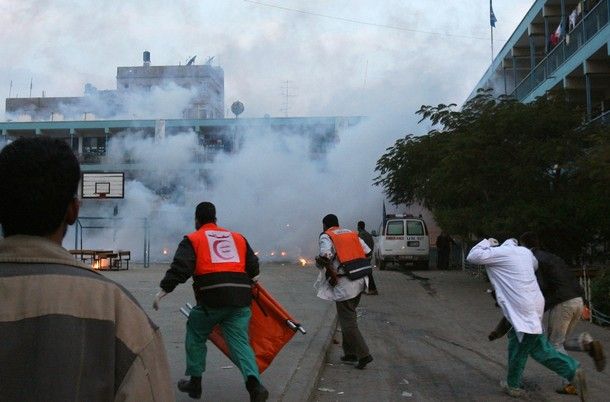
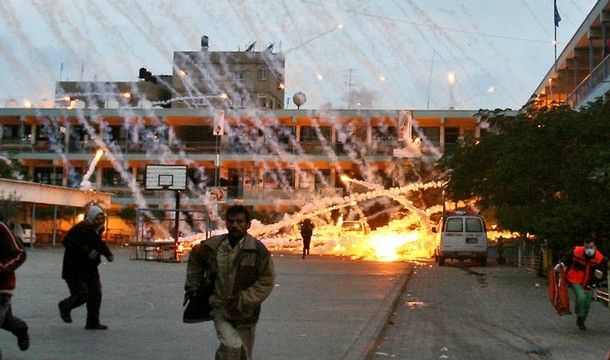
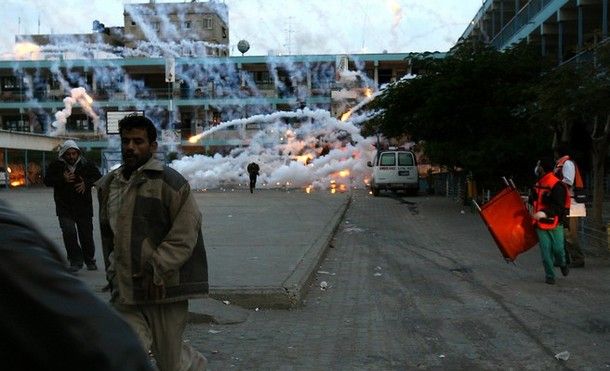
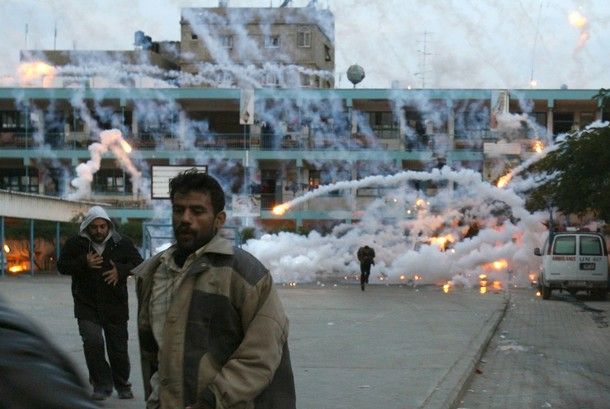
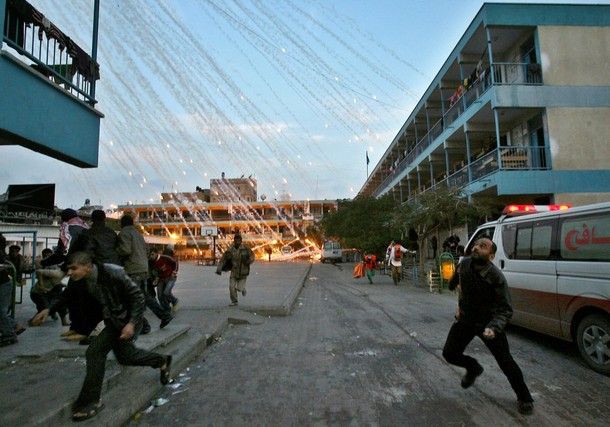
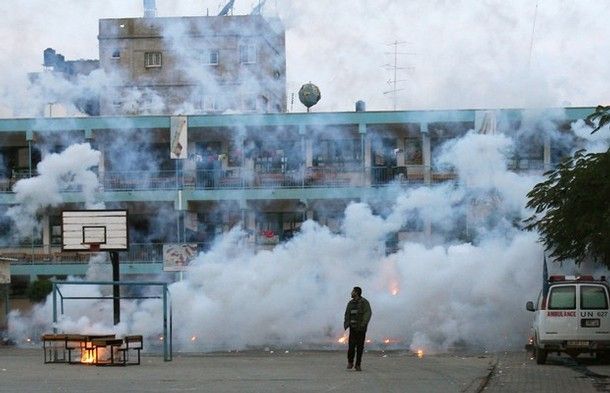
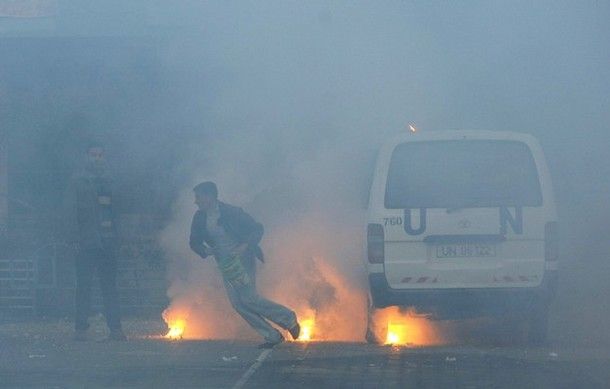
Chemical Weapons Used on Palestinian School Children

Israeli brutality in broad daylight: A chemical weapon attack on Palestinian school children
© Reuters

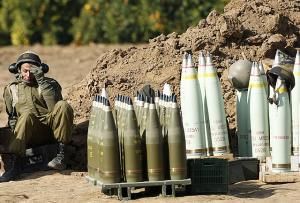
Lying through their teeth: M825A1 155mm
projectiles, painted light green to designate
a munition containing white phosphorus,
stand fused and ready with an IDF artillery
unit firing into Gaza.


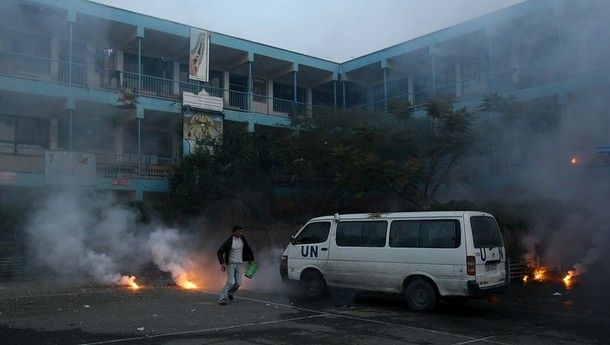
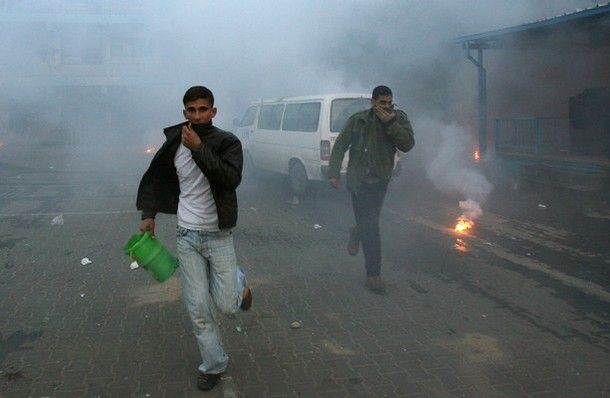
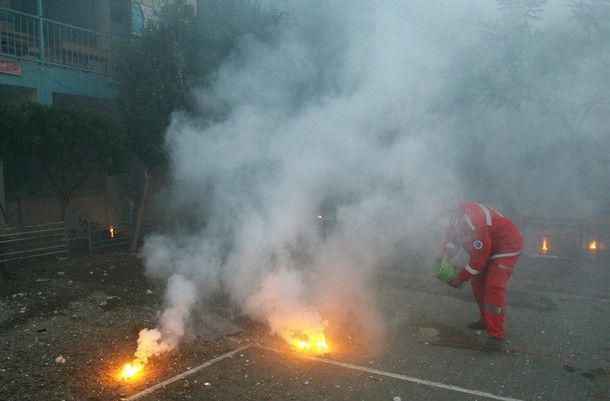
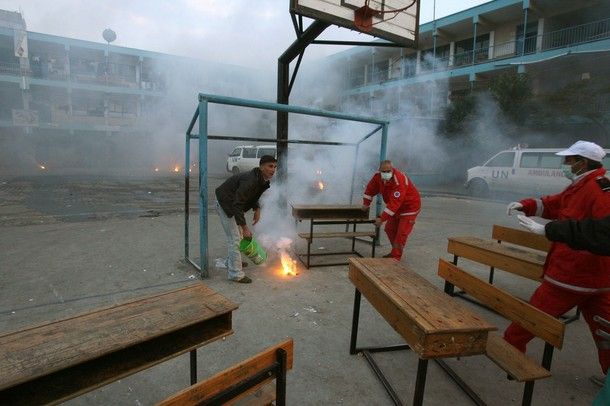
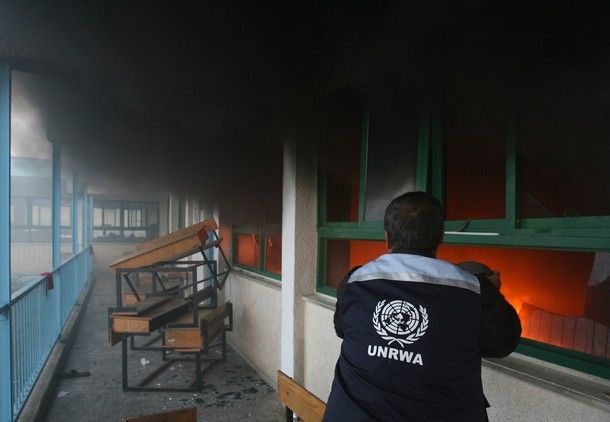
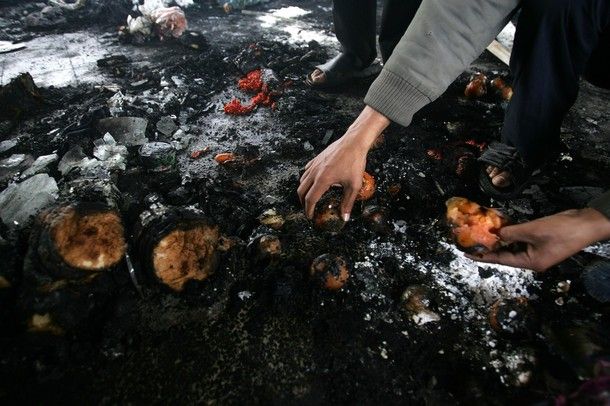
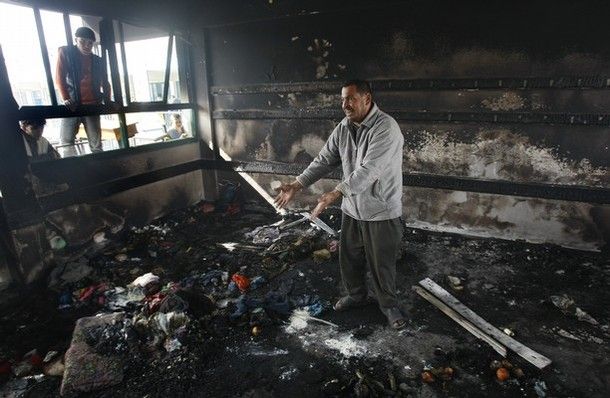
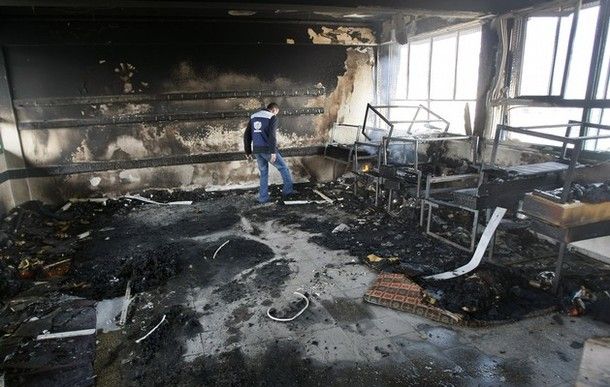
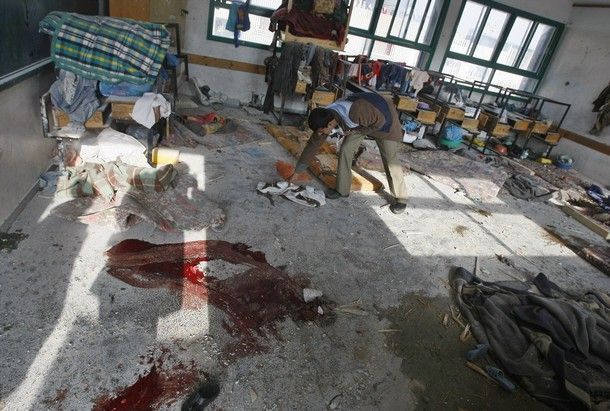
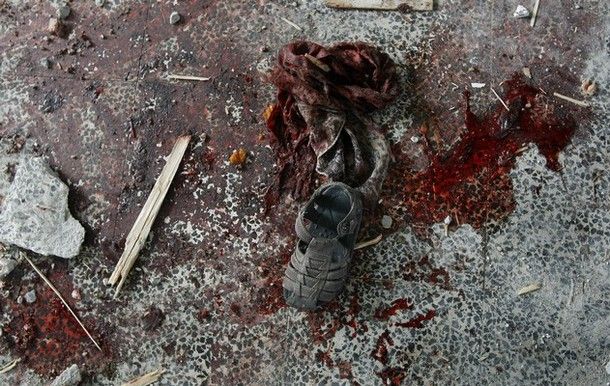
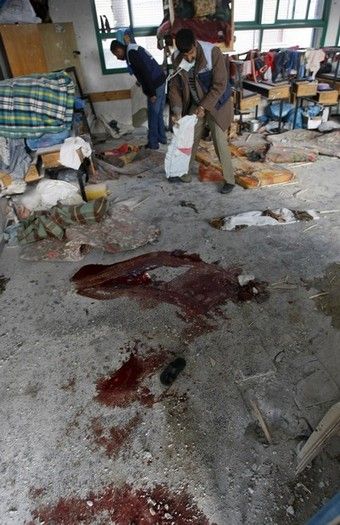
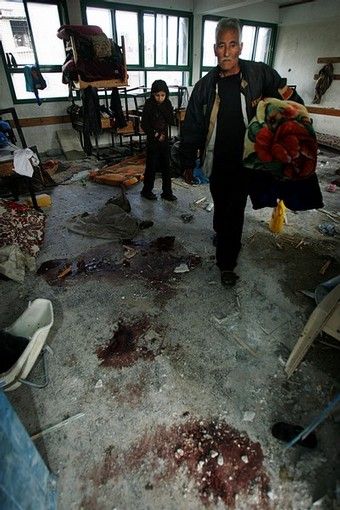
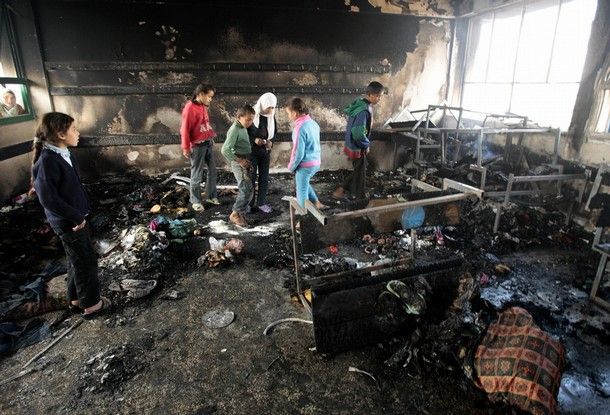
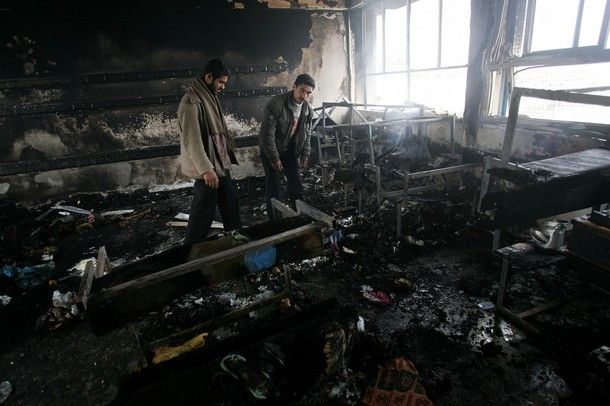
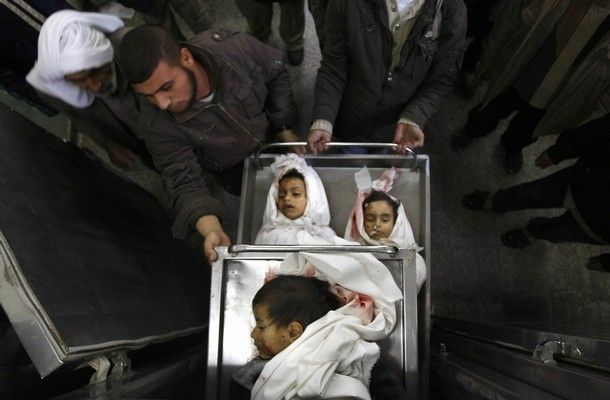
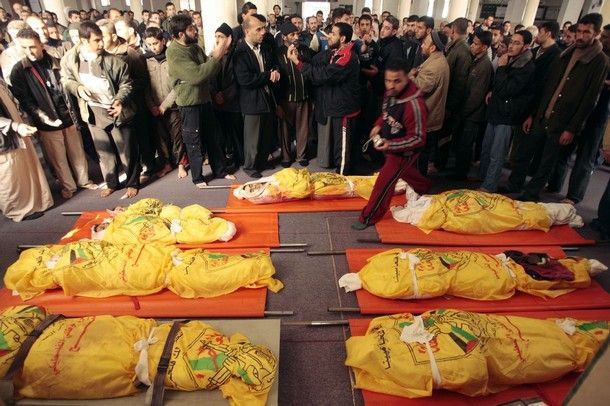
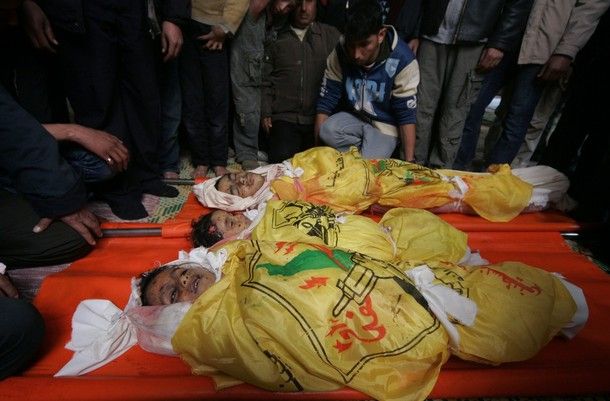
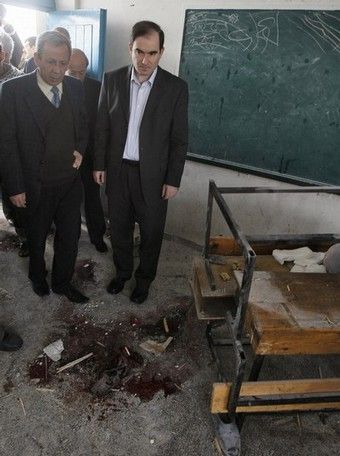
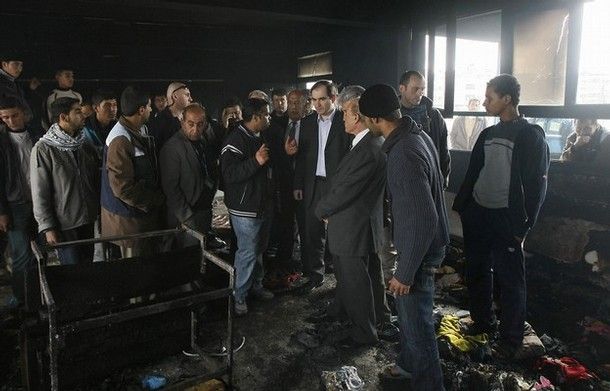
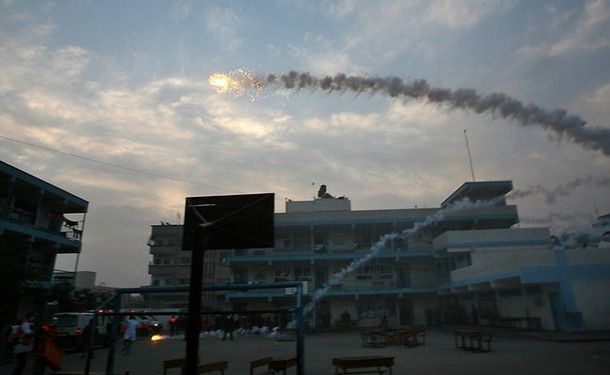
These photos, taken a few months ago, record in detail an Israeli attack on a Palestinian school, an attack using white phosphorus:
White phosphorous is a colorless to yellow translucent wax-like substance with a pungent, garlic-like smell. The form used by the military is highly energetic (active) and ignites once it is exposed to oxygen. White phosphorus is a pyrophoric material (it is spontaneously flammable). When exposed to air, it spontaneously ignites and rapidly oxidizes to phosphorus pentoxide. Such heat is produced by this reaction that the element bursts into a yellow flame and produces a dense white smoke. This chemical reaction continues until either all the material is consumed or the element is deprived of oxygen. White phosphorus results in painful and deep chemical burn injuries. Rapid dermal penetration occurs once particles are embedded under the skin. Incandescent particles of white phosphorous may produce extensive burns. The particles continue to burn unless deprived of atmospheric oxygen. Weapons containing white phosphorous are particularly nasty because it continues to burn until it disappears, often burning right down to the bone.

The White Phosphorus flame produces a hot, dense, white smoke composed of particles of phosphorus pentoxide, which are converted by moist air into phosphoric acid. This acid, depending on concentration and duration of exposure, may produce a variety of topically irritative injuries. Exposure to heavy smoke concentrations for extended periods (particularly if near the source of emission) may cause illness or even death. Its fumes can cause severe eye irritation including blepharospasm, photophobia, and lacrimation. Irritation of the eyes and irritation of the mucous membranes are the most commonly seen injuries.
The use of this lethal substance is supposedly 'permmissable' under the "laws of war", ostensibly to destroy the enemy's equipment or to limit his vision. But when whole populations are designated as 'enemy', as the Israeli regime does the population of Gaza, the results are horrifying.

At the time the Israeli regime denied using this lethal substance during its bombardment of besieged Gaza. Roundly condemned by international obersvers, it now admits 'Willie Pete' was used, but says it did not fire munitions laden with the chemical weapons "inside populated areas."

These photos tell the true story.

United Nations Relief and Works Agency school in Beit Lahiya, Gaza, Palestine

© Mohammed Abed/AFP/Getty Images

© Mohammed Abed/AFP/Getty Images

© Mohammed Abed/AFP/Getty Images

© Unknown

© Mohammed Abed/AFP/Getty Images

© Mohammed Abed/AFP/Getty Images

© Mohammed Abed/AFP/Getty Images

© Mohammed Abed/AFP/Getty Images

© Mohammed Abed/AFP/Getty Images

© Mohammed Abed/AFP/Getty Images

© Mohammed Abed/AFP/Getty Images

© Mohammed Abed/AFP/Getty Images

© Mohammed Abed/AFP/Getty Images

© Mohammed Abed/AFP/Getty Images

© Mohammed Abed/AFP/Getty Images

© Mohammed Abed/AFP/Getty Images

© Mohammed Abed/AFP/Getty Images

© Mohammed Abed/AFP/Getty Images

© Mohammed Abed/AFP/Getty Images

© Mohammed Abed/AFP/Getty Images

© Mohammed Abed/AFP/Getty Images

© Mohammed Abed/AFP/Getty Images

© Mohammed Abed/AFP/Getty Images

© Mohammed Abed/AFP/Getty Images

© Mohammed Abed/AFP/Getty Images

© Mohammed Abed/AFP/Getty Images

© Mohammed Abed/AFP/Getty Images

© Mohammed Abed/AFP/Getty Images

© Mohammed Abed/AFP/Getty Images

© Mohammed Abed/AFP/Getty Images

© Mohammed Abed/AFP/Getty Images

© Mohammed Abed/AFP/Getty Images

Comment: "We could hear their bodies burning"
"The smoke was spreading so fast; we couldn't see through it. We couldn't see, but we could hear." From the windows of the burning home the cries of her children and cousins filled the streets. "The cries were not just from my home, but from the neighbors' house too."
Israelis Rain 'Phosphorous Bombs' Over Gaza
"I've been on the border for the last few days watching the Israeli artillery firing white phosphorus shells into refugee camps."

"While the international community might be horrified by the use of phosphorous, this is overlooking the issue that hundreds of half-tonne bombs are being dropped on Gaza on civilian targets on a daily basis."

Friday, February 27, 2009

Video: Psychopathic Israeli Military Shoot Gaza Farmer


Israeli forces shot a twenty year-old Palestinian farmer as he worked his land in the village of Al-Faraheen, east of Khan Younis in the Gaza Strip.

International Human Rights Activists were accompanying the group of farmers at the time as they worked approximately 500m from the Green Line.

Mohammad al - Breem, 20, was shot in the right leg as the farmers, together with the international Human Rights Activists, attempted to leave the area having worked on their land for 2 hours in full view of the Israeli forces situated along the Green Line.

As the farmers were loading up the parsley and spinach from the agricultural lands shots were fired from Israeli forces on the border. Mohammad was shot in the right leg and evacuated, while still under fire, to hospital.

International Human Rights Activists have repeatedly witnessed Palestinian farmers being shot at by Israeli forces as they attempt to work on agricultural land situated within 700m of the Green Line.

On Tuesday 27th January 2009, in Al Faraheen, Israeli forces shot at several farmers, killing a 27 year old farmer.

Sunday, February 15, 2009

Gaza: Watching the 'Death Circus'

"The Israelis can kill whomever they want whenever they want."
-- Paul Craig Roberts
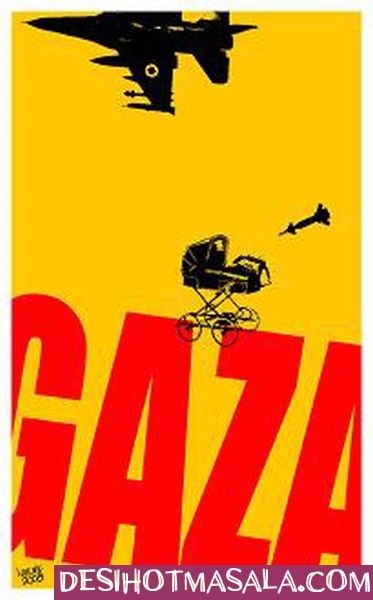
Gaza
© Desihotmasala.com

I sometimes think that it's pointless for Americans to talk much about recent events in Gaza because we know how it will play out - America will do absolutely nothing to interfere with the ongoing massacre.

British journalist Robert Fisk reminds us of the drill:
So once again, Israel has opened the gates of hell to the Palestinians. Forty civilian refugees dead in a United Nations school, three more in another. Not bad for a night's work in Gaza by the army that believes in "purity of arms." But why should we be surprised?

Have we forgotten the 17,500 dead - almost all civilians, most of them children and women - in Israel's 1982 invasion of Lebanon; the 1,700 Palestinian civilian dead in the Sabra-Chatila massacre; the 1996 Qana massacre of 106 Lebanese civilian refugees, more than half of them children, at a UN base; the massacre of the Marwahin refugees who were ordered from their homes by the Israelis in 2006 then slaughtered by an Israeli helicopter crew; the 1,000 dead of that same 2006 bombardment and Lebanese invasion, almost all of them civilians?
This time around, Israel shows not the slightest compunction about brazenly massacring an imprisoned population in front of the world. But why should they? They know no real opposition will arise from power centers anywhere on earth. And they continue to have America - Republicans, Democrats, Christian Zionists and almost everybody else - in their thrall. In large part, this is due to what Israel Shamir wrote with respect to Jewish financial mischief: "The rich Jews buy media so it will cover up their (and their brethren's) misdeeds."

James Petras also weighed in on Israel's ongoing war against the Palestinians, writing, "Israel's sustained and comprehensive bombing campaign of every aspect of governance, civic institutions and society is directed toward destroying civilized life in Gaza." Echoing Shamir, Petras noted that Israel's attempt to "purge Palestine of its Arab population" continues without apology because "The Israeli totalitarian leaders knew with confidence that they could act and they could kill with impunity, locally and before the entire world, because of the influence of the US Zionist Power Configuration in and over the US White House and Congress."

Another voice that showed exasperation with Israel's actions was that of Taki Theodoracopulos, who wrote, "Israel can now safely be called the Bernie Madoff of countries, as it has lied to the world about its intentions, stolen Palestinian lands continuously since 1948, and managed to do all this with American tax payer's money."

Perhaps no one, however, is more morally outraged than former Reagan administration official Paul Craig Roberts, who wrote:
Caterpillar Tractor makes a special bulldozer for Israel that is designed to knock down Palestinian homes and to uproot their orchards. In 2003 an American protester, Rachel Corrie, stood in front of one of these Caterpillars and was run over and crushed.

Nothing happened. The Israelis can kill whomever they want whenever they want.

They have been doing so for 60 years, and they show no sign of stopping.
Roberts continued, "While the rest of the world condemns Israel's inhumanity, the US Congress - I should say the US Knesset - rushed to endorse the Israeli slaughter of the Palestinians in Gaza." How pervasive was this endorsement? "The US Senate endorsed Israel's massacre of Palestinians with a vote of 100-0. The US House of Representatives voted 430-5 to endorse Israel's massacre of Palestinians. . . ."

Readers who have followed Roberts in the post-9-11 period know that he has been a persistent critic of Israel's influence over President Bush and the Congress. He has not changed his position with respect to Gaza either: "The US Congress was proud to show that it is Israel's puppet even when it comes to murdering women and children. The President of the United States was proud to block effective action by the UN Security Council by ordering the Secretary of State to abstain."

Two days later, Roberts added to his critique, displaying how fully Bush is a puppet to an Israeli master:
"Early Friday morning the secretary of state was considering bringing the cease-fire resolution to a UN [Security Council] vote and we didn't want her to vote for it," Olmert said. "I said 'get President Bush on the phone.' They tried and told me he was in the middle of a lecture in Philadelphia. I said 'I'm not interested, I need to speak to him now.' He got down from the podium, went out and took the phone call."
Roberts then turned to a friend's comments to summarize this exchange:
"Let me see if I understand this," wrote a friend in response to news reports that Israeli Prime Minister Olmert ordered President Bush from the podium where he was giving a speech to receive Israel's instructions about how the United States had to vote on the UN resolution. "On September 11th, President Bush is interrupted while reading a story to school children and told the World Trade Center had been hit - and he went on reading. Now, Olmert calls about a UN resolution when Bush is giving a speech and Bush leaves the stage to take the call. There exists no greater example of a master-servant relationship."
Aptly, Roberts concluded, "In his final press conference, President Bush, deluded to the very end, said that the whole world respects America. In fact, when the world looks at America, what it sees is an Israeli colony."

And the behavior of America's master is none too pleasant, as retired U.S. Air Force Lieutenant Colonel Karen Kwiatkowski recently made clear:
One needs only to look at the death toll (one-sided), the difference in military capacities between Israel and Gaza (shocking) and the kind of arsenals employed by both sides to determine what is happening. We've seen it on the elementary school playground, but this version is played out with incredible destructive force, no supervision, no brave friends, and no justice.
Not only is incredible destructive force in view for the whole world, a bizarre Israeli response to the slaughter has surfaced: It is the "ultimate spectator sport," in the words of a London Times reporter.

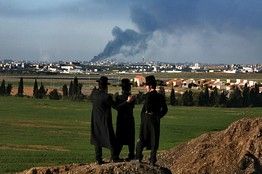
As a front-page article in the Wall Street Journal also described, from hilltops overlooking Gaza, Israelis would come with lawn chairs and picnics lunches to watch the one-sided death circus that is Gaza. Israelis "have made the trek, they say, to witness firsthand a military operation - so far, widely popular inside Israel - against Hamas, the militant group that controls the Gaza Strip. Over the weekend, four teenagers sat on a hill near Mr. Danino's, oohing and aahing at the airstrikes. Nadav Zebari, who studies Torah in Jerusalem, was eating a cheese sandwich and sipping a Diet Coke."

Levinson took quotes from observers: "I've never watched a war before," one said. Meanwhile, a group of Israeli police officers took turns snapping pictures of one another with smoking Gaza as a backdrop. "I want to feel a part of the war," was one comment.

"On another hilltop overlooking Gaza," Levinson continued, "Sandra Koubi, a 43-year-old philosophy student, says seeing the violence up close 'is a kind of catharsis for me, to get rid of all the anxiety we have inside us after years of rocket fire' from Hamas."

Perhaps most pointedly comes the testimony of one Jocelyn Znaty, "a stout 60-year-old nurse for Magen David Adom, the Israeli counterpart of the Red Cross," who could "hardly contain her glee at the site of exploding mortars below in Gaza." "Look at that," she shouts, clapping her hands as four artillery rounds pound the territory in quick succession. "Bravo! Bravo!" . . . I am sorry, but I am happy."

Israelis watching the destruction of Gaza
© Pavel Wolberg/European Pressphoto Agency
"Beautiful, is it not?"

Roberts, like Taki and others, put much of the blame for such a spectacle clearly on the shoulders of the American public. "What is happening to the Palestinians herded into the Gaza Ghetto is happening because of American money and weapons. It is just as much an attack by the United States as an attack by Israel. The US government is complicit in the war crimes."

Repeating charges he has made consistently for years, Roberts laments the fact that "'Our' president was a puppet for a cabal led by Dick Cheney and a handful of Jewish neoconservatives, who took control of the Pentagon, the State Department, the National Security Council, the CIA, and 'Homeland Security.' From these power positions, the neocon cabal used lies and deception to invade Afghanistan and Iraq, pointless wars that have cost Americans $3 trillion, while millions of Americans lose their jobs, their pensions, and their access to health care."

While Roberts et al. may be right that each and every American taxpayer bears some responsibility for the carnage in Gaza, the fact is that most Americans are tired of violence in the far-away Middle East. Besides, the economy is in the tank, the NFL playoffs are in progress, and the kids have to go back to school. Everyday life takes priority for most Americans.

Unfortunately, such short-sightedness will not do, for the pitiful denizens of Gaza are not the last targets of the Israeli army or the worldwide network of Diaspora Jews. The dispossession of the Palestinians since 1948 is but a dress rehearsal for more ambitious dispossessions of non-Jews throughout the world.

Do I exaggerate? I believe that we have to take Israel Shamir seriously when he writes in Cabbala of Power, "Palestine is not the ultimate goal of the Jews; the world is. Palestine is just the place for the world state headquarters."

Shamir has made a fascinating study of the two thousand-year struggle between Jews and non-Jews, particularly Christians. His arguments are far too subtle to summarize here, so interested parties should consult the above-mentioned book as well as his more recent work, Masters of Discourse. I will simply cherry pick some of his more striking ideas.

Shamir - an immigrant from Russia to Israel - holds a low opinion of his fellow Jews in the Holy Land. "Israelis are the riffraff of World Jewry, sent to conquer the land for the NWO HQ." This process is revealed in a parable of the "Messiah's Donkey" often used by religious Jews. This is a story in which disposable secular Jews (the donkey) are used by religious Jews to attain religious, messianic goals. "In plain words, spirit always wins over matter; the way of the Messiah of Spirit is to use the Donkey of Matter."

"The Jews" - Shamir makes a distinction between organized Jewry and individual Jews - "intend to turn Jerusalem into the supreme capital of the world, and its rebuilt temple into the focal point of the Spirit on Earth." Should they succeed, unspeakable despair will follow. "Christianity will die, the spirit will depart from the nations in our part of the world, and our present dubious democracy will be supplanted by a vast theocratic state. . . . De-spiritualized and uprooted, homeless and lonely, yesterday's Masters of the World [non-Jews] will become slaves in all but name."

Shamir sees a two-pronged approach to this quest for world domination, Zionism and Mammonite Liberalism. "While Zionism establishes the basis for the NWO HQ, the Mammonite Liberalism establishes the world-wide slavery. Jabotinsky and Soros are doing different tasks for one system; the Iron Wall and the Open Society are just different names for the same thing."

Shamir's analysis is eerily close to the Dispossessed Majority thesis of Wilmot Robertson, albeit cloaked in theological garb. Robertson described how in the 1960s and 70s white American Christians "had become a people of little or no account in their own country." This was not an accident.

In my next column, I will expand on this argument.

Comment: It must be stressed that Jews, Christians and Muslims - all socially programmed minions of patriarchal 'dominator' religions - have been manipulated one against another through the ages. Ideology and dogma of all description mask the real origins of the 'destructive principle': an intra-species predator psychologists call psychopaths, that has co-habited this planet unseen... until now.

Tuesday, January 13, 2009

More from the 'most moral' army in the world

Focused Lethality: Phosphorous Bomb Rain Over Northern Gaza


Hiyam Noir
PalestineFreeVoice
Tue, 13 Jan 2009 18:27 UTC
Gaza City January 8 2009

Gaza - Blankets of white clouds covered the skies over Gaza, including the refuge camps in Khan Younis, Beit Lahia and Gaza City. On Saturday Israeli F16 warplanes launched attacks using phosphorus bombs on the Block 2 section inside the densely populated Jabalya Refuge Camp. Many residents of Jabalya escaped the area covering their faces, searching for a safe shelter in the home of relatives and friends in the neighboring Beit Lahia from the Israelis "Cast Lead Operation". Gaza has always been the Israelis "testing ground" - from nerve agents used in Khan Younis in 2003, to Sonic Boom "phantom air raids", and the use of DIME in the Israelis massacre called " Operation Summer Rain" over Gaza year 2006.

In the dark night the terrifying sound of Drones [small, pilotless planes,] can be heard overflying the northern parts of Gaza Strip. Most deaths and injuries from Israelis air strikes are caused by drones. Drones are using precise remote-controlled devices to launch missiles against targets. A drone can launch bombs, also take photos of the small number plates on cars thousands of meters below on the ground, also recognise and track location of the signals from mobile phones.

On Friday, PCHR, the Palestinian Center for Human Rights in Gaza accused in a statement, the Israelis of using phosphorous bombs over Gaza Strip.Raji Sourani, the chairman of PCHR, said that "This is not the first time we [PCHR] have documented the Israelis use of prohibited chemical weapons against the Gaza civilian population. The HRW Human Rights Watch senior analyst Marc Garlasco said in an interview on France Chanel 4 TV that .."Israeli artillery bursted fire of white phosphorous shells over Gaza City. "Garlasco said .."I have been standing at the border for the last few days, watching Israeli artillery firing white phosphorus shells into refugee camps".

On Sunday, the Israeli military denied the accusations saying that "We would not discuss what weapons we are using. I can assure you we do not use any weapons that are prohibited by international law. We know that other nations are using phosphorous bombs, we have the right not to comment on this", the Israeli military spokesperson added.

During the first invasion to Iraq, the US occupation forces used phosphorous bombs against the civilian population in Falluyah. Also the Israelis were accused of using phosphorous bombs against civilian targets in Lebanon during the 2006 Israel war on Lebanon.The Israelis at first denied the charges, however when the following investigation overwhelmingly proved and confirmed its findings, the Israelis could not deny the evidence.

["The US did the same in Fallujah, so don't be talking about us"]

The director of the emergency at the Shuhada Al-Aqsa Hospital in Gaza City, Habas Al-Wahis, told journalists 3 years ago that in several cases, the legs and arms of the injured were sliced from their bodies, Al Wahis said - "as if a sharp saw was used to cut through the bone, however there was no evidence of ordinary metal shrapnel in or near the wounds. At the Al Shifa Hospital also in Gaza City, Dr. Juma Saka, said then, in 2006 that, - "our hospital found small entry wounds on the bodies of the dead and wounded, and a powder on the victims' body, and in their internal organs.

According to Dr. Saka, "The powder is like microscopic shrapnel, likely it caused the injuries". Italian journalists from the Ray TV news network, the channel 24, brought samples of soil from Gaza, back to Parma in Italy. The samples was examined by Carmela Vaccaio, a doctor at the University of Parma, and it turned out that the samples had a high concentration of carbon,copper,aluminium and tungsten. "These findings could be in line with the hypothesis that the weapon in question, was a dense inert metal explosive or DIME" said Valesco.

DIME [Dense Inert Metal Explosive] is a carbon encased missile that shatters into minuscule splinters on the impact. The missile sets off an explosive that burst out, blades of energy-charged, heavy metal tungsten alloy powder, (HMTA), such as cobalt and nickel or iron, with a carbon fibre casing. At the impact the material turns into dust, as it loses inertia very quickly due to air resistance, burning and destroying everything within a 4 metre range, as opposed to shrapnel which results from the fragmentation of a metal casing.

The metal is designated "inert", because it is not involved in the actual blast, and not because it is chemically or biologically inert. In many cases, findings have been made by doctors, that their patients during the first days of the impact, apparently in recovery, will die a sudden death after one or two days. "We do not know what it means, if this is new weapons or something added to a previous weapon " said Saied Joudda, the deputy director at the Kamal Edwan hospital in Beit Lahia. These injuries were first seen in July 2006, after that the Israelis launched a massive military offensive against Gaza one month earlier, at the end of June, the Israelis had killed at least 286 Palestinians and injured over 4,200, according to Gaza governmental emergency services estimations

Tungsten, the main material that would stray outside of the target zone, is also said to be highly carcinogenic and harmful to the environment. According to New Scientist magazine, John Kalinich's team at the Armed Forces Radio biology Research Institute in Maryland said, that in a study designed to simulate shrapnel injuries, pellets of weapons-grade tungsten alloy were implanted in 92 rats. Within five months all the animals developed a rare cancer called rhabdomyosarcoma.The carcinogenic effects of HMTA have been studied by the US Armed Forces since at least 2000 (along with depleted uranium). These alloys were found to cause neoplastic transformations of human osteoblast cells.

Dr. Mark Witten, a cancer researcher from the University of Arizona, said he was concerned about the possible links between tungsten and leukaemia. "My opinion is that there is a need for much more research on the health effects of tungsten, before the military increases its usage," he said. Later, in a statement issued, the Israelis denied the use of DIME weapons, adding that "Due to operational reasons, the IOF [Israeli Occupation Forces] cannot specify the types and use of weapons in its possession."

Adding to their great suffering, Palestinian survivors of this new weaponry can in the future, expect to fall victim to cancer.

Friday, January 09, 2009

The brutal face of Israel's "total war" on Gaza

The humane world is running out of words to express outrage at the cruelty of the Israeli assault on Gaza. Perhaps the words of those who are living it will be more powerful.

Blue Ibis
****************************************************************
The brutal face of Israel's "total war" on Gaza

Bill Van Auken
World Socialist Web Site
Fri, 09 Jan 2009 18:34 UTC


© WSWS

B'Tselem, the Israeli group that monitors human rights in the occupied territory, spoke to 19-year-old Meysa a-Samuni, a young woman with an infant daughter, who witnessed the massacre of much of her family in the Zeitun neighborhood south of Gaza City. They were killed when Israeli troops shelled a house which they and others had been ordered to enter.

She told B'Tselem: "On Sunday [4 January], around 9 a.m., soldiers came to the house of my father-in-law, Rashed a-Samuni, which is located next to a concrete engineering company. We were 14 people in the house, all of us from a-Samuni family: me, my husband, Tawfiq, 21, our infant, Jumana, nine months old, my father-in-law, Rashed, 41, my mother-in-law, Rabab, 38, and my husband's brothers, Musa, 19, Walid, 17, Halmi, 14, Zeineb, 12, Muhammad, 11, Shaban, 9, Issa, 7, Islam, 12, Israa, 2.

"The soldiers came to the house on foot and knocked on the door. We opened and then, threatening us with weapons, they forced us to leave the house. They had bulletproof vests on and had automatic weapons. Their faces were painted black. We left the house. Walid ran from another door of the house, but the soldiers caught him.

"The soldiers led us by foot to the house of my father-in-law's brother, Talal Halmi a-Samuni, 50, about 20 meters away. In the house were already about 20 people, and together we were 35. The soldiers left us, apparently to search my father-in-law's house.

"About an hour later, the soldiers came back and ordered us to go with them to the house of Wail a-Samuni, 40. His house is a kind of concrete warehouse, about 200 square meters big, about 20 meters from Talal's house, where we were. We reached Wail's house at 11:00 a.m. There were already 35 people there, so now we were about 70 in total. We stayed there until the next morning. We didn't have food or drink.

"Around six o'clock in the morning [Monday, 5 January], it was quiet in the area. One of the men in the family, Adnan a-Samuni, 20, said that he wanted to go and bring his uncle and family so they could be with us. My father-in law and his nephew, Salah Talal a-Samuni, 30, and his cousin Muhammad Ibrahim a-Samuni, 27, were standing at the door of the house and planned on going together to bring them. The moment they left the house, a missile or shell hit them. Muhammad was killed on the spot and the others were injured from the shrapnel. My husband went over to them to help, and then a shell or missile was fired onto the roof of the warehouse. Based on the intensity of the strike, I think it was a missile from an F-16.

"When the missile stuck, I lay down with my daughter under me. Everything filled up with smoke and dust, and I heard screams and crying. After the smoke and dust cleared a bit, I looked around and saw 20-30 people who were dead, and about 20 who were wounded. Some were severely wounded and some lightly.

"The persons killed around me were my husband, who was hit in the back, my father-in-law, who was hit in the head and whose brain was on the floor, my mother-in-law Rabab, my father-in-law's brother Talal, and his wife Rhama Muhammad a-Samuni, 45, Talal's son's wife, Maha Muhammad a-Samuni, 19, and her son, Muhammad Hamli a-Samuni, five months, whose whole brain was outside his body. Razqa Muhammad a-Samuni, 50, Hanan Khamis a-Samuni, 30, and Hamdi Majid a-Samuni, 22.

"My husband's brother, Musa, and I were lightly injured. Musa was injured in the shoulder and my left hand was injured. My daughter was injured in the left hand. Her thumb, second finger, and third finger had been cut off. I took a kerchief and wrapped her hand to stop the bleeding. The wounded who lay on the floor cried for help and couldn't move. The small children and my husband's grandmother, Shifaa a-Samuni, 70, were crying.

"About 15 minutes after the second strike, Musa said that it would be better to escape and go to the house of his uncle, Assad a-Samuni, about 20 meters away. We ran and knocked on the gate, but nobody answered. Musa jumped over the gate and opening it and we went inside. We were me, my daughter, Musa, and his little sisters Islam, five, and Isra, two. There were 40-50 soldiers in the house, and more people were gathered in one of the rooms. There were about 30 people, 7-10 of them men. The men were blindfolded.

"One of the soldiers came to me and gave me and my daughter first-aid. He bandaged our hands and checked our pulse. Then the soldiers tied Musa and blindfolded him.

"The soldiers told us that they would release us and leave only Musa and his uncle 'Emad in case Hamas came. I understood that they intended to use them as 'human shields.' They ordered us to leave the house, and we walked along the street about 400-500 meters until we found an ambulance, which took me and my daughter to a-Shifa Hospital. The others from my family continued to walk in the street. Later, some of them also arrived at the hospital.

"As far as I know, the dead and wounded who were under the ruins are still there. I didn't see that any of them had been brought to the hospital."

In another testimony gathered by B'Tselem, Abdallah Tawfiq Hamdan Kashku, a 44-year-old policeman with four children living in Gaza City, recounted:

"My family lives in a three-storey house in al-Zeitun, Gaza City. On Sunday [28 December], around 7 p.m., I was sitting with nine members of my family around a bonfire in the yard. It was cold, and we didn't have electricity to heat the house. I turned on the generator to turn on the light. Then we heard the sound of planes in the sky. I heard a buzz and within a few seconds, I found myself under the rubble. I didn't know what happened to me or to my family. I began to cry for help. The smoke was thick. I couldn't see any of my family, who had been sitting with me a few moments earlier.

"It took a few moments before I realized the house had collapsed because of the bomb. Neighbors rushed to pull us from the rubble. People took my family to the hospital, some by car and some by ambulance. I was taken to al-Shifa Hospital where the doctors treated me. I was slightly wounded in the leg. I asked my relatives and the doctors where the rest of my family was. They told me my wife had a broken pelvis and that the others had suffered light wounds but that they hadn't found my little daughter, Ibtihal. I felt horrible, worrying so much about her.

"Early the next morning, my brothers went home to look for Ibtihal. They looked under the ruins and found her body in the kitchen on the second floor.

"Our house was in a quiet area. I don't think there are military targets in the area. We don't have relatives or neighbors who are wanted. I am still in shock. In a few minutes, the life of my family was turned completely upside down."

Yusef 'Abd al-Karim Barakeh Abu Hajaj, a resident of Juhar a-Dik, an agricultural area in the center of the Gaza Strip, described a January 4 attack on his home where 15 members of his family were staying:

"Around 7 a.m., an Israeli tank fired at our house. We decided to leave, and went to our neighbor, Hussein al-'Aydi. A little while later, we heard that the army told people to leave the houses in the area, and we decided to go to another place. We left together with the neighbor's family. Together, we were 25 persons.

"When we went outside, we held up white cloth, so the soldiers would know we were civilians. We were afraid they would shoot us, but we walked anyway, having no alternative. Women and small children were in our group. When we got to a point opposite the tanks, they opened fire at us. My mother was hit and fell down. Then my sister Majda was hit in the back. Both were killed. We ran back, toward Hussein al-'Ayadi's house. Mother and Majda remained lying on the ground.

"We immediately called the Red Crescent and the Red Cross to ask them to remove the bodies. Because of the shelling, nobody could get there. The next day, we realized we had to leave the area, and we fled.

"Now I'm living in the school in Nuseirat. We didn't manage to coordinate removal of the bodies of Mother and Majda, and they are apparently still outside. We don't know when we can move them. It is very crowded in the school, so some of my family went to stay in other places."

Hussein al-'Ayadi, 60, also from Juhar a-Dik, spoke to B'Tselem on January 7:

"My house is made of concrete, which is why my brothers came to live with me when the fighting began," he said.

"Saturday night [3 January], there was lots of tank fire and aerial bombing, and we all went into the main room, which is more secure. A shell fell on the roof of the house, tearing a hole into the ceiling and injuring a few of us lightly. We all went to the ground floor and then a tank fired another shell, which hit the house, injuring eight people in my family: Nur Hussein al-'Ayadi, 16, Wa'ed Adnan al-'Ayadi, 13, Raghda Adnan, 17, Hind Adnan, 14, Walid Adnan, 6, Kamela Hashem al-'Ayadi , 80, Doha Hassan al-'Ayadi, 80, and Doa'a Farid al-'Ayadi , 18. All were lightly injured.

"With the house damaged, we are now hiding in a small room in the yard. We have been in contact with all kinds of people in an attempt to get the army to let us take out the injured without getting fired at, but without success. The Red Cross told us that the army claims that nobody is trapped in our area, and is not willing to let them enter.

"We called Physicians for Human Rights and contacted Knesset members. Lots of people are trying to help us, but nothing has happened so far.

"We are eating what remained in the house and vegetation from the yard, which we cook, but we are a large number of people, and the food is beginning to run out."

And the Reuters news agency carried the tragic account given by Dr. Awni Al-Jaru, a surgeon at the Shifa Hospital, Gaza's largest medical facility, whose house in the Tuffah neighborhood of north Gaza was fired on by an Israeli tank Thursday.

"I was sitting inside the room when there was a boom and I ran out to the hall and saw my son Abdel-Rahim. I asked him where was his mother and brother Youssef.

"I found my wife Albina cut in two parts and my son Youssef completely blown apart. I could only recognize him from his teeth," said the doctor.

Dr. Jaru's wife was Ukrainian-born and could have left Gaza with other foreign-born residents before Israel unleashed its full fury against Gaza, but she refused to go. Their son Youssef was 18 months old.B'Tselem, the Israeli group that monitors human rights in the occupied territory, spoke to 19-year-old Meysa a-Samuni, a young woman with an infant daughter, who witnessed the massacre of much of her family in the Zeitun neighborhood south of Gaza City. They were killed when Israeli troops shelled a house which they and others had been ordered to enter.

She told B'Tselem: "On Sunday [4 January], around 9 a.m., soldiers came to the house of my father-in-law, Rashed a-Samuni, which is located next to a concrete engineering company. We were 14 people in the house, all of us from a-Samuni family: me, my husband, Tawfiq, 21, our infant, Jumana, nine months old, my father-in-law, Rashed, 41, my mother-in-law, Rabab, 38, and my husband's brothers, Musa, 19, Walid, 17, Halmi, 14, Zeineb, 12, Muhammad, 11, Shaban, 9, Issa, 7, Islam, 12, Israa, 2.

"The soldiers came to the house on foot and knocked on the door. We opened and then, threatening us with weapons, they forced us to leave the house. They had bulletproof vests on and had automatic weapons. Their faces were painted black. We left the house. Walid ran from another door of the house, but the soldiers caught him.

"The soldiers led us by foot to the house of my father-in-law's brother, Talal Halmi a-Samuni, 50, about 20 meters away. In the house were already about 20 people, and together we were 35. The soldiers left us, apparently to search my father-in-law's house.

"About an hour later, the soldiers came back and ordered us to go with them to the house of Wail a-Samuni, 40. His house is a kind of concrete warehouse, about 200 square meters big, about 20 meters from Talal's house, where we were. We reached Wail's house at 11:00 a.m. There were already 35 people there, so now we were about 70 in total. We stayed there until the next morning. We didn't have food or drink.

"Around six o'clock in the morning [Monday, 5 January], it was quiet in the area. One of the men in the family, Adnan a-Samuni, 20, said that he wanted to go and bring his uncle and family so they could be with us. My father-in law and his nephew, Salah Talal a-Samuni, 30, and his cousin Muhammad Ibrahim a-Samuni, 27, were standing at the door of the house and planned on going together to bring them. The moment they left the house, a missile or shell hit them. Muhammad was killed on the spot and the others were injured from the shrapnel. My husband went over to them to help, and then a shell or missile was fired onto the roof of the warehouse. Based on the intensity of the strike, I think it was a missile from an F-16.

"When the missile stuck, I lay down with my daughter under me. Everything filled up with smoke and dust, and I heard screams and crying. After the smoke and dust cleared a bit, I looked around and saw 20-30 people who were dead, and about 20 who were wounded. Some were severely wounded and some lightly.

"The persons killed around me were my husband, who was hit in the back, my father-in-law, who was hit in the head and whose brain was on the floor, my mother-in-law Rabab, my father-in-law's brother Talal, and his wife Rhama Muhammad a-Samuni, 45, Talal's son's wife, Maha Muhammad a-Samuni, 19, and her son, Muhammad Hamli a-Samuni, five months, whose whole brain was outside his body. Razqa Muhammad a-Samuni, 50, Hanan Khamis a-Samuni, 30, and Hamdi Majid a-Samuni, 22.

"My husband's brother, Musa, and I were lightly injured. Musa was injured in the shoulder and my left hand was injured. My daughter was injured in the left hand. Her thumb, second finger, and third finger had been cut off. I took a kerchief and wrapped her hand to stop the bleeding. The wounded who lay on the floor cried for help and couldn't move. The small children and my husband's grandmother, Shifaa a-Samuni, 70, were crying.

"About 15 minutes after the second strike, Musa said that it would be better to escape and go to the house of his uncle, Assad a-Samuni, about 20 meters away. We ran and knocked on the gate, but nobody answered. Musa jumped over the gate and opening it and we went inside. We were me, my daughter, Musa, and his little sisters Islam, five, and Isra, two. There were 40-50 soldiers in the house, and more people were gathered in one of the rooms. There were about 30 people, 7-10 of them men. The men were blindfolded.

"One of the soldiers came to me and gave me and my daughter first-aid. He bandaged our hands and checked our pulse. Then the soldiers tied Musa and blindfolded him.

"The soldiers told us that they would release us and leave only Musa and his uncle 'Emad in case Hamas came. I understood that they intended to use them as 'human shields.' They ordered us to leave the house, and we walked along the street about 400-500 meters until we found an ambulance, which took me and my daughter to a-Shifa Hospital. The others from my family continued to walk in the street. Later, some of them also arrived at the hospital.

"As far as I know, the dead and wounded who were under the ruins are still there. I didn't see that any of them had been brought to the hospital."

In another testimony gathered by B'Tselem, Abdallah Tawfiq Hamdan Kashku, a 44-year-old policeman with four children living in Gaza City, recounted:

"My family lives in a three-storey house in al-Zeitun, Gaza City. On Sunday [28 December], around 7 p.m., I was sitting with nine members of my family around a bonfire in the yard. It was cold, and we didn't have electricity to heat the house. I turned on the generator to turn on the light. Then we heard the sound of planes in the sky. I heard a buzz and within a few seconds, I found myself under the rubble. I didn't know what happened to me or to my family. I began to cry for help. The smoke was thick. I couldn't see any of my family, who had been sitting with me a few moments earlier.

"It took a few moments before I realized the house had collapsed because of the bomb. Neighbors rushed to pull us from the rubble. People took my family to the hospital, some by car and some by ambulance. I was taken to al-Shifa Hospital where the doctors treated me. I was slightly wounded in the leg. I asked my relatives and the doctors where the rest of my family was. They told me my wife had a broken pelvis and that the others had suffered light wounds but that they hadn't found my little daughter, Ibtihal. I felt horrible, worrying so much about her.

"Early the next morning, my brothers went home to look for Ibtihal. They looked under the ruins and found her body in the kitchen on the second floor.

"Our house was in a quiet area. I don't think there are military targets in the area. We don't have relatives or neighbors who are wanted. I am still in shock. In a few minutes, the life of my family was turned completely upside down."

Yusef 'Abd al-Karim Barakeh Abu Hajaj, a resident of Juhar a-Dik, an agricultural area in the center of the Gaza Strip, described a January 4 attack on his home where 15 members of his family were staying:

"Around 7 a.m., an Israeli tank fired at our house. We decided to leave, and went to our neighbor, Hussein al-'Aydi. A little while later, we heard that the army told people to leave the houses in the area, and we decided to go to another place. We left together with the neighbor's family. Together, we were 25 persons.

"When we went outside, we held up white cloth, so the soldiers would know we were civilians. We were afraid they would shoot us, but we walked anyway, having no alternative. Women and small children were in our group. When we got to a point opposite the tanks, they opened fire at us. My mother was hit and fell down. Then my sister Majda was hit in the back. Both were killed. We ran back, toward Hussein al-'Ayadi's house. Mother and Majda remained lying on the ground.

"We immediately called the Red Crescent and the Red Cross to ask them to remove the bodies. Because of the shelling, nobody could get there. The next day, we realized we had to leave the area, and we fled.

"Now I'm living in the school in Nuseirat. We didn't manage to coordinate removal of the bodies of Mother and Majda, and they are apparently still outside. We don't know when we can move them. It is very crowded in the school, so some of my family went to stay in other places."

Hussein al-'Ayadi, 60, also from Juhar a-Dik, spoke to B'Tselem on January 7:

"My house is made of concrete, which is why my brothers came to live with me when the fighting began," he said.

"Saturday night [3 January], there was lots of tank fire and aerial bombing, and we all went into the main room, which is more secure. A shell fell on the roof of the house, tearing a hole into the ceiling and injuring a few of us lightly. We all went to the ground floor and then a tank fired another shell, which hit the house, injuring eight people in my family: Nur Hussein al-'Ayadi, 16, Wa'ed Adnan al-'Ayadi, 13, Raghda Adnan, 17, Hind Adnan, 14, Walid Adnan, 6, Kamela Hashem al-'Ayadi , 80, Doha Hassan al-'Ayadi, 80, and Doa'a Farid al-'Ayadi , 18. All were lightly injured.

"With the house damaged, we are now hiding in a small room in the yard. We have been in contact with all kinds of people in an attempt to get the army to let us take out the injured without getting fired at, but without success. The Red Cross told us that the army claims that nobody is trapped in our area, and is not willing to let them enter.

"We called Physicians for Human Rights and contacted Knesset members. Lots of people are trying to help us, but nothing has happened so far.

"We are eating what remained in the house and vegetation from the yard, which we cook, but we are a large number of people, and the food is beginning to run out."

And the Reuters news agency carried the tragic account given by Dr. Awni Al-Jaru, a surgeon at the Shifa Hospital, Gaza's largest medical facility, whose house in the Tuffah neighborhood of north Gaza was fired on by an Israeli tank Thursday.

"I was sitting inside the room when there was a boom and I ran out to the hall and saw my son Abdel-Rahim. I asked him where was his mother and brother Youssef.

"I found my wife Albina cut in two parts and my son Youssef completely blown apart. I could only recognize him from his teeth," said the doctor.

Dr. Jaru's wife was Ukrainian-born and could have left Gaza with other foreign-born residents before Israel unleashed its full fury against Gaza, but she refused to go. Their son Youssef was 18 months old.
Wednesday, January 07, 2009

Oh the Horror! But Whose?

The cliche still holds true, pictures worth a thousands words and all. Here is a sample of that cliche. Compare the destructive power of missiles launched at Gaza from Israel, and the destruction wrought by those "thousands of rockets" from Gaza "rained down" upon poor Israel. Then decide who is the agressor.

Blue Ibis
*****************************************************************
The Other Side of the Story!

Palestinian Mothers
Mon, 05 Jan 2009 17:38 UTC

We have heard the Palestinian side of the story, as you can see from the images below:


Now, let's see the other side of the story, shall we? The carnage, the destruction, the annihilation, the pain, and the horror caused by qassam rockets:<


>


When will Israel stop the rockets?