Showing posts with label Dick Cheney. Show all posts

Wednesday, November 26, 2008

Crimes against Humanity: Impeach Bush and Cheney NOW!

Before the bastards pardon themselves. Don't think they won't try it either. If you've haven't found enough reasons in the last eight years, the documentaries linked below should do it.

It's probably our last chance for regaining any respect for the US on the world stage.
Obama has shown he won't take any action. Call your congressman or woman and tell them the grow a spine! Impeach George Bush and Dick Cheney.

Blue Ibis
**********************************************************

Torturing Democracy: A Documentary That Could Put Dick Cheney Out Of Our Misery
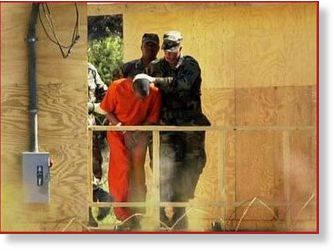
torture
© unknown
Torturing Democracy, an expose of how and why America came to be involved in open large-scale torture of prisoners (many of whom were simply shepherds captured by mountain tribesmen and sold into captivity), is now available for viewing online.

As Scott Horton reported last month, PBS can't find a time slot for this Frontline documentary until January 21, 2009 -- the day after Bush and Cheney are scheduled to leave office.

Horton has reported more recently that this documentary could help to provide "A Ticket to The Hague for Dick Cheney". Why? Because it has the power to change the minds of influential people in denial.

Horton explains:
Gene Burns is one of the nation's most popular talk radio hosts. For years he has dismissed accounts of torture; America, he has said, does not torture. But last night, after watching Torturing Democracy and realizing that he had not understood how important and serious an issue torture had become, Burns abruptly changed his tune. Here's a transcript of his remarks.
I now believe that some international human rights organization ought to open an investigation of the Bush Administration, I think focused on Vice President Dick Cheney, and attempt to bring charges against Cheney in the international court of justice at The Hague, for war crimes. Based on the manner in which we have treated prisoners at Guantánamo Bay, and the manner in which we have engaged in illegal rendition - that is, surreptitiously kidnapping prisoners and flying them to foreign countries where they could be tortured by foreign agents who do not follow the same civilized standards to which we subscribe.

I've always said that I've thought that even at Guantánamo Bay the United States was careful to stay on this side of torture. In fact, you may recall that on a couple of occasions we got into a spirited debate on this program about waterboarding, and whether waterboarding was torture. And I took the position that it was not torture, that it was simulated drowning, and that if that produced information which preserved our national security, I thought it was permissible.

And then I saw Torturing Democracy.

And I'm afraid, now that I have seen what I have seen, that I was wrong about that. It looks to me, based on this documentary, as if in fact we have engaged in behavior and practices at Guantánamo Bay, and in these illegal renditions, that are violations of the international human rights code.

And I believe that Dick Cheney is responsible. I believe that he was the agent of the United States government charged with developing the methodology used at Guantánamo Bay, supervising it for the administration, and indulging in practices which are in fact violations of human rights.
A large part of the population still credits the Bush Administration's absurd claim that it never embraced or applied torture to detainees as a matter of policy. Two recent documentaries, Alex Gibney's Oscar-winning Taxi to the Dark Side (for which I was both a consultant and interviewee) and Sherry Jones's PBS feature Torturing Democracy investigate the administration's policies and conduct. Both draw from decision-makers inside the administration and soldiers on the frontline.

The administration did its best to spike both films. Taxi was to be aired on the Discovery Channel, but with Discovery Communications then in the process of going public and facing sensitive SEC clearances, executives apparently decided not to risk provoking the anger of the White House. As I reported elsewhere, PBS also found that it had no network space for Torturing Democracy until January 20, 2009 - the day the Bush Administration decamps from Washington.

Why was the administration so concerned about these two films? The conversion of Gene Burns supplies the answer. No one who sits through these films, I believe, will be able afterwards to accept the official version of events. George Bush has good reason to be afraid of too many Americans watching these documentaries.
George Bush is not the only one who has good reason to be afraid of too many Americans watching these documentaries. And that, in my opinion, is good incentive to watch them -- and to spread the word about them!

So here are those links again:
Torturing Democracy
Taxi to the Dark Side

Thursday, June 19, 2008

Tortures ' "Bad Apples" Revealed: BUSH & CHENEY

Just as suspected all along, the approval for the torture of the prisoners of the US Military came all the way from the top. More disturbing is the the implication that these activities are the inevitable results of allowing pathologically disturbed individuals access to power. It's not so far from blowing up frogs to water-boarding and electro-shocking human beings.

Remember, these acts are committed in the name of "National Security" ie, YOUR security.

Who's for impeachment now?

Blue Ibis
****************************************************

Juan Cole
juancole.com
Thu, 19 Jun 2008 16:36 EDT

McClatchy and other reporters are abruptly pulling the curtain away from the Bush team's illegal practices in arresting people arbitrarily, declining to offer proof that they were guilty of anything, detaining them indefinitely without trial or charges, and deliberately torturing them to the extent of leaving long-term scars and disabilities. The torture practices originated not with lower-level officers but with Donald Rumsfeld and others in Bush's inner circle, who then later blamed lower-level officials for developing the ideas that Rumsfeld ordered them to develop. Nothing they have done has survived a court challenge where one has been permitted.

torture
©Salon.com

Recent reports, taken together, provide a chilling glimpse of a vast torture operation, deliberately planned out by serial torturers in Bush's White House and possibly by the president himself. The program was designed to repeal the Geneva Conventions, which the US and Israel have long found inconvenient, even though they were legislated to prevent further abuses such as those of the Nazis. AP interviews with former detainees show that they were systematically tortured and sometimes permanently injured.

A Senate report details the evidence that Rumsfeld and other high officials were complicit in ordering torture. That is, they are war criminals.

The Bush administration committed clear war crimes at Guantanamo, Abu Ghraib and Bagram, according to Maj. Gen. Antonio Taguba. The only question, he says, is whether anyone will be held accountable.

The Underscretary of Defense for Planning, Douglas Feith abruptly pulled out of his testimony on Capitol Hill about torture techniques, apparently because he was afraid to testify in the same session as Lawrence Wilkerson, the former chief of staff of Colin Powell. Wilkerson was high enough to hear the real story on a lot of issues and could have shredded Feith's lies into confetti if they testified together.

Medical examinations of former US detainees shows that they were tortured. The full report is here.

CIA counterterrorism lawyer Jonathan Fredson appears to have argued that virtually anything short of lethal force was permitted. He told the Pentagon that torture "is basically subject to perception." He did admit the principle that "If the detainee dies, you're doing it wrong."

{Shades of the Inquisition! The same mindset is still with us. Only the name of the "demons" have changed"}

Then there is the McClatchy series, based on extensive interviews with dozens of released former detainees from Guantanamo and Bagram:

Tom Lasseter writes:

"The framework under which detainees were imprisoned for years without charges at Guantanamo and in many cases abused in Afghanistan wasn't the product of American military policy or the fault of a few rogue soldiers. It was largely the work of five White House, Pentagon and Justice Department lawyers who, following the orders of President Bush and Vice President Dick Cheney, reinterpreted or tossed out the U.S. and international laws that govern the treatment of prisoners in wartime, according to former U.S. defense and Bush administration officials."

A lot of Bush's detainees had no connection to international terrorism. Some had even fought the Taliban, been captured, and then were sold to the Americans by the Taliban, who had in the meantime changed turbans and begun pretending to be loyal to Karzai.

At Afghan bases, the US military routinely practiced torture on prisoners.

In fact, the US torture turned some innocent detainees into terrorists, determining them to attack the US on their release.

McClatchy has posted many of the documents on which its series is based.

Aljazeera International interviews McClatchy reporters, who spent a year tracking down and interviewing former detainees.

Part I:


and Part II:

The Public Record wonders why Bush, McCain and the Wall street Journal are rushing to defend torture now. {????}

The tendency of the bureaucracy to experiment on human guinea pigs reached beyond the torture of detainees to mentally distressed Veterans. The Veterans Administration experimented on them with pharmaceuticals, without their knowledge. The VA neglected to tell them the drug they were being fed had serious side effects, including "anxiety, nervousness, tension, depression, thoughts of suicide, and attempted and completed suicide." Oh, yeah, that's what a person who has been through hell in Iraq and has post-traumatic stress really needs.

So all these revelations should be on cable news 24/7, right? Not so much.

As Gen. Taguba says, the fact of the extensive torture is not in doubt. The question is whether the Bushies will get away with it. It is looking as though they will. But there are going to be some European countries where Bush and his cronies would be ill advised to visit.

Thursday, July 19, 2007

You're So Vain . . . . . . .

Creating panic in the populace is the oldest trick in the book. It worked in 2001 for Bush, who's number were tanking due to the slowing economy. What's really pathetic is that he thinks 9-11 was all for him, when in fact he is just the talking head for powers he barely perceives. As the song about the psychopath goes "You're so vain . . . . .

Blue Ibis
********************************************************************

Paul Craig Roberts
Information Clearing House
Thu, 19 Jul 2007 19:59 EDT

This is a wake-up call that we are about to have another 9/11-WMD experience.


The wake-up call is unlikely to be effective, because the American attitude toward government changed fundamentally seventy-odd years ago. Prior to the 1930s, Americans were suspicious of government, but with the arrival of the Great Depression, Tojo, and Hitler, President Franklin D. Roosevelt convinced Americans that government existed to protect them from rapacious private interests and foreign threats. Today, Americans are more likely to give the benefit of the doubt to government than they are to family members, friends, and those who would warn them about the government's protection.

Intelligent observers are puzzled that President Bush is persisting in a futile and unpopular war at the obvious expense of his party's electoral chances in 2008.

In the July 18 Los Angeles Times ("Bush the Albatross"), Ronald Brownstein reminds us that Bush's behavior is disastrous for his political party. Unpopular presidents "have consistently undercut their party in the next election." Brownstein reports that "88% of voters who disapproved of the retiring president's job performance voted against his party's nominee in past elections. . . . On average, 80% of voters who disapproved of a president's performance have voted against his party's candidates even in House races since 1986."

Brownstein notes that with Bush's dismal approval rating, this implies a total wipeout of the Republicans in 2008.

A number of pundits have concluded that the reason the Democrats have not brought a halt to Bush's follies is that they expect Bush's unpopular policies to provide them with a landslide victory next year.

There is a problem with this reasoning. It assumes that Cheney, Rove,and the Republicans are ignorant of these facts or are content for the Republican Party to be destroyed after Bush has his warmonger-police state fling. "After me, the deluge."

Isn't it more likely that Cheney and Rove have in mind events that will, once again, rally the people behind President Bush and the Republican Party that is fighting the "war on terror" that the Democrats "want to lose"?

Such events could take a number of forms. As even diehard Republican Patrick J. Buchanan observed on July 17, with three US aircraft carrier battle groups in congested waters off Iran, another Tonkin Gulf incident could easily be engineered to set us at war with Iran. If Bush's intentions were merely to bomb a nuclear reactor, he would not need three carrier strike forces.

Lately, the administration has switched to blaming Iran for the war in Iraq. The US Senate has already lined up behind the latest lie with a 97-0 vote to condemn Iran.

Alternatively, false flag "terrorist" strikes could be orchestrated in the US. The Bush administration has already infiltrated some dissident groups and encouraged them to participate in terrorist talk, for which they were arrested. It is possible that the administration could provoke some groups to actual acts of violence.

Many Americans dismiss suspicion of their government as treasonous, and most believe conspiracy to be impossible "because someone would talk."

There is no basis in any known fact for this opinion.

According to polls, 36% of the American people disbelieve the 9/11 Commission Report. Despite this lack of confidence, and despite the numerous omissions and errors in the report, it has proven impossible to have an independent investigation of 9/11 or to examine the official explanation in public debate. Even experts and people with a lifetime of distinguished public service are dismissed as "conspiracy theorists," "kooks," and "traitors" if they question the official explanation of 9/11. This despite the fact that war in the Middle East, a long-planned goal of Bush's neoconservative administration, could not have been initiated without a "new Pearl Harbor."

That powerfully constructed steel buildings could suddenly turn to dust because they were struck by two flimsy aluminum airliners and experienced small fires on a few floors that burned for a short time appears unexceptionable to a majority of Americans.

Moreover, people have talked. Hundreds of them. Firefighters, police, janitors, and others report hearing and experiencing a series of explosions in upper floors and massive explosions in the underground basements. This eyewitness testimony was kept under wraps for three or more years until the official explanation had taken root. The oral histories were finally forced loose by freedom of information act suits. The eyewitness reports of explosion after explosion had no effect.

Larry Silverstein, who received billions of dollars in insurance payments for the destroyed buildings, talked. He said on public television that the order was given "to pull" building 7. His stunning admission had no effect.

The Bush administration is preparing us for more terrorist attacks. The latest intelligence report says that Al Qaeda has regrouped, rebuilt, and has the ability to come after us again. "Al Qaeda will intensify its efforts to put operatives here," says the report.

Security operatives, such as Michael Chertoff, and various instruments of administration propaganda have warned that we will be attacked before next year's election. Chertoff is not a person who wants to be known as Chicken Little for telling us that the sky is falling.

Bush has the Republican Party in such a mess that it cannot survive without another 9/11. Whether authentic or orchestrated, an attack will activate Bush's new executive orders, which create a dictatorial police state in event of "national emergency." [See HERE ]

The UK government is hand-in-glove with the Bush administration and will provide cover or verification for whatever claim the Bush administration advances. So will the right-wing governments in Canada and Australia. That takes care of the English-speaking world from which contrary explanations might reach the American people.

It is possible that Bush is now too weak, that suspicion is too great, and that there is too much internal resistance in the federal bureaucracy and military for any such scenario. If so, then my prediction prior to the invasion that the US invasion of Iraq will destroy Bush, the Republican Party, and the conservative movement will be proven true. The Democrats' strategy of doing nothing except making sure Bush gets his way will produce the landslide that they expect.

However, this assumes that Cheney, Rove, and their neoconservative allies have lost their cunning and their manipulative skills. It is difficult to imagine a more dangerous assumption for Democrats and the American people to make.

Once the US experiences new attacks, Bush will be vindicated. His voice will be confident as he speaks to the nation: "My administration knew that there would be more attacks from these terrorists who hate us and our way of life and are determined to destroy every one of us. If only more of you had believed me and supported my war on terror these new attacks would not have happened. Our security efforts were impaired by the Democrats' determined attempts to surrender to the terrorists by forcing our withdrawal from Iraq and by civil libertarian assaults on our necessary security measures. If only more Americans had trusted their government, this would not have happened." And so on. Anyone should be able to write the script.

Paul Craig Roberts was Assistant Secretary of the Treasury in the Reagan administration. He was Associate Editor of the Wall Street Journal editorial page and Contributing Editor of National Review. He is coauthor of The Tyranny of Good Intentions. He can be reached at: PaulCraigRoberts@yahoo.com

Saturday, June 23, 2007

Political Ponerology


A powerful presentation. It gets right to the heart of this most important book. Available from Red Pill Press (www.redpillpress.com) This is a book the fate of the world might depend on.

Tuesday, May 29, 2007

Iraq Was About WMD? No. Democracy? No. OIL??

Interestingly, no. The stakes are much higher than squabbles over a resource pie. The technology already exists to obviate the need for oil, as soon as it become inconvenient. Oil is a cover for a much larger game. Read on. Then check this site to better understand the twisted minds who would enact such barbarities.

Blue Ibis

***********************************************************************
The Bush-Cheney Regime and U.S. Middle East Policy:
Radical Nihilists Driving Permanent War


Ronald Bleier
Bleier's Blog
Tue, 29 May 2007 14:10 EDT

As we move well into the fifth year of the Iraq war, a few brave voices are daring to suggest that the catastrophe that is now Iraq was not a result of a colossal mistake but is rather the result of conscious, deliberate intention.

The U.S. did not invade Iraq to establish "democracy" and to "free Iraqis". The U.S. invaded and destroyed Iraq in order to humiliate and divide Muslims - Arabs in particular - protect Israel's Zionist expansion and control Iraq's natural wealth.

I see the Bush-Cheney-Rumsfeld clique... as radical nihilists, bent on permanent war and destruction for its own sake. According to Wikipedia, one of the definitions of Nihilism is the irrational desire to destroy meaning, knowledge and value and it embraces suicide and mass murder.

"What I'm describing to the American people is this war on terror is going to take awhile, and Iraq is just a part of it."
----President George W. Bush, Interview with NPR/ Juan Williams, 1.29.07

When we look at the situation in Iraq today we see the destruction of a country and the unimaginable tragedy and suffering of tens of millions of peoples, only a tiny portion of which is reported in the mainstream media.

By way of acknowledging some of the nightmare that is Iraq today, I'd like to quote a portion of an email sent to me by a colleague in April 2007. My friend had just attended a lecture at MIT given by an Iraqi academic now teaching in England. According to my informant, women in Iraq today, fear going into labor at night because they are terrified they and their husbands will be killed on the way to hospital. EVERYONE fears going outside on the commonest of errands -- so much so that when people leave the house they say goodbye for the last time, since each time may well be the last.

Women are afraid to leave their houses and many if not most are simply house-bound. Schools and universities are non-functioning. University professors among this lecturer's circle of friends have taught two or three classes in the past YEAR because criminal gangs/the factions have targeted professors as well as non-university professionals (doctors for instance) and have been killing them wantonly.

Electrical grids and water supplies are still ravaged, with, for instance, no air conditioning in heats frequently at 120 degrees Fahrenheit (this affects women, children and family life in ways one can only imagine); queues for everything, including of course petrol - queues that give warring factions and gangs further killing opportunity.

By some estimates, excess Iraqi deaths since March 2003 exceed a million. More than 2 million Iraqis have been forced to flee the country, the bulk to Jordan and Syria, threatening their stability. Hundreds if not more of the cream of Iraq's professional and academic society, a bulwark against fascism have been victims of targeted assassination, similar in purpose and manner to Israeli targeted assassinations of Palestinian activists. This crime wave has forced thousands of their professional colleagues to join the massive refugee outflow.

There is also an enormous loss of blood and treasure to the coalition forces. One thing the losses on both sides have in common is the apparent disinterest and pitilessness of the Bush-Cheney clique to the enormous human and cultural and civic tragedy and suffering on all sides.

Several questions arise, chief among them: how long can this devastation continue? Due to a confluence of forces, not least consideration of Israeli interests, there is no consensus in Congress to put a brake on the war momentum that the Bush administration has achieved.

Perhaps the most useful question is still: Why did we go to war in the first place? As a springboard to my argument I'd like to use a fairly conventional and economical statement of the reasons for the Iraq war by Ghali Hassan, writing for the Global Research website. In his article, "Iraq's Death Squads: An Instrument of the Occupation," he begins, as he says, by stating the obvious.

The U.S. did not invade Iraq to establish "democracy" and to "free Iraqis". The U.S. invaded and destroyed Iraq in order to humiliate and divide Muslims - Arabs in particular - protect Israel's Zionist expansion and control Iraq's natural wealth.

The contradiction between Israel's goals and bringing democracy to the Middle East was also mentioned by NYT op ed columnist Robert Wright. He asks

What if the Iraqi people, once empowered by democracy, decided they didn't want their country to be a U.S. aircraft carrier? ... After all, America is bound to use bases on behalf of itself and key allies, and one key ally is Israel. What were the chances this would sit well with an Arab Muslim nation...

It's not for oil

A more controversial point raised by Ghali Hassan is the one about controlling Iraq's natural resources. One of the mantras of the anti-war left is that the invasion of Iraq has been and still is a war for oil. But is this correct? As a number of observers have pointed out, there's no evidence that oil was the Bush's administration's priority, nor that the oil companies were pushing for this war. Even Noam Chomsky, a major proponent of the war for oil theory has lately noticed that it seems that the war has, if anything, put Iraq's oil reserves in jeopardy. If the real goal of U.S. policy was to ensure a reliable and cheap oil supply they would have done everything in their power to keep Saddam Hussein in place. Bush and Cheney would not have embarked upon a policy that predictably would destabilize the region.

But why would the security conscious Bush administration embark on an illegal, wildly unpopular war if they knew in advance that it was going to destabilize a key region of the world? That they knew in advance is hardly open to question. Cheney himself as Secretary of Defense in the George H. W. Bush administration in 1991 argued that for the U.S. get involved in regime change in Iraq "strikes me as a classic definition of a quagmire."

As we move well into the fifth year of the Iraq war, a few brave voices are daring to suggest that the catastrophe that is now Iraq was not a result of a colossal mistake but is rather the result of conscious, deliberate intention. Nicholas Kristof's remarkable op ed column, entitled "Iran's Operative in the White House," where he wondered whether Bush administration policies which seemed to empower Iran's most hard-line elements were driven by "malice" or "ineptitude."

It may be helpful to consider whether the drive for Empire and the broad nature of what we mean by Imperialism, accurately describe the Bush administration's wars against Afghanistan and Iraq and the war many believe they still hope to initiate against Iran.

Observing the current chaos and devastation that is Iraq today, we can suggest that the purpose of the war was not to extend the American imperium or aggrandize U.S. Empire. Quite the opposite.

The day before the Bush clique took office in January 2001, the US was the world's only superpower, the strongest empire, the most powerful imperial nation in history. If Empire was all they wanted, they could have simply coasted for eight years, and they would have ended up perhaps even stronger than when they started. But the Bush-Cheney agenda was not passive and it had nothing to do with the painstaking work of carefully consolidating and adding to Empire.

The concern that the Bush administration is not about growing Empire, but about weakening it, perhaps fatally, was expressed by none other than President Carter's National Security Adviser, Zbigniew Brzezinski, one of the foremost spokespersons for American Empire. In a mid March 2007 interview on NPR, Brzezinski warned that the ongoing wars in Afghanistan and Iraq might spiral into an utterly destructive war with Iran. Indeed, in February 2007, in testimony before the Senate Foreign Relations Committee he surprisingly wondered out loud whether the Bush administration might deliberately provoke war with Iran by staging some sort of incident or provocation. Even more to our present purpose, he went on in the question and answer portion of his testimony to assert that the U.S.'s Iran policy has worked against its own interests. Brzezinski spoke of the "exceedingly hostile" U.S. attitude toward Iran which has gelled together a kind of residual national sentiment, particularly in support of the nuclear program.

And I think our policy has unintentionally- I hope unintentionally; maybe it was devilishly clever, but I think unintentionally
helped Ahmadinejad consolidate himself in power...
(emphasis added)

Why would Brzezinski broadly hint that the Bush administration might be intentionally shoring up support for the most hard line elements in Iran? Is he not suggesting that approach would ease their path to a disastrous war? Such a theory would also fit well with their otherwise arbitrary decision to include Iran as part of the Axis of Evil in 2002.

Had Bush and Cheney wanted to extend the U.S. Empire, they would have acted in a manner calculated to enhance their advantages and enrich their coffers. They would have acted for their perceived benefit and self-interest. If the priority in Iraq was self-interest, wholesale destruction of the invaded country would have been be avoided. Self-interest imposes limits on the Imperial power.

Confusion about Empire

One reason for popular confusion about Empire may be that an Imperial power typically uses its military might or the threat of its military might to extend, consolidate or preserve its empire. However true Empire builders characteristically are judicious in their use of the military. They generally shun the reckless profligacy and sheer waste that Bush-Cheney have exhibited. If Empire is to be advanced, not the use of power, but the threat of the use of power is often most effective. Empire builders typically use the tools of diplomacy; they forge alliances, employing the military only as a last resort. Empire builders would also work to strengthen the military, not tear it down and destroy it. They would devote adequate resources for training and equipping their military, and would seek to provide adequate health care if only for the purpose of maintaining the morale of current and incoming troops. Their privatization scheme for the military speaks volumes about their underlying motivations. Jeremy Schahill, the author of a recently published book on Blackwater, The Rise of the World's Most Powerful Mercenary Army (Nation Books) has asserted that the Bush administration has proven to be the most anti-military administration in history.

Stephen Smith/ The first days of the occupation

At the very beginning of the occupation of Iraq the Bush administration gave evidence that their intention was to destroy the country when they allowed or encouraged the ruin of Iraq's cultural heritage.

Six months after the occupation, Stephen Smith, writing for electronicIraq.net had sufficient perspective to point to this crucial issue and to suggest an appropriate theory.

Heavy suspicion remains that failure of the US to protect heritage sites, more than negligence, was a deliberate oversight designed as a kind of cultural 'shock and awe' that would devastate a sense of shared culture among Iraqis, leaving a blank page for the imprint of the US occupying force and the reconstruction to follow. If proven, this would be cultural genocide not witnessed during this civilization and indeed rarely experienced over the 7,000-year time span of these lost collections.

Smith quotes senior Middle East correspondent Robert Fisk who asks the appropriate questions.

"But for Iraq, this is Year Zero; with the destruction of the antiquities in the Museum of Archaeology and the burning of the National Archives and then the Koranic library, the cultural identity of Iraq is being erased. Why? Who set these fires? For what insane purpose is this heritage being destroyed?"

Both Smith and Fisk have suggested answers to their own questions. Yes, allowing the trashing of Iraq's cultural heritage was a deliberate oversight (if that's the right word) intended to reduce the country to a blank page, to year Zero. And Fisk also gets it right by suggesting that the purpose, to destroy Iraqi civil life, destroy its sense of cultural heritage was perhaps clinically insane in the sense that it cannot have any constructive purpose.

A war for Israel

Writing at the very beginning of the invasion in March 2003, conservative journalist Patrick Buchanan pretty much identified the purposes of the war.

"We charge that a cabal of polemicists and public officials seek to ensnare our country in a series of wars that are not in America's interests. We charge them with colluding with Israel to ignite those wars and destroy the Oslo Accords. We charge them with deliberately damaging U.S. relations with every state in the Arab world that defies Israel or supports the Palestinian people's right to a homeland of their own. We charge that they have alienated friends and allies all over the Islamic and Western world through their arrogance, hubris, and bellicosity.

If there is anything missing from Buchanan's argument it would be the deeper intention behind the war policy of the Bush administration. That intention, much easier to see today than in March 2003, is to bring Iraq back to Year Zero, to rub it out as a political and civil entity.

Activist and journalist Naomi Klein went to Baghdad in 2004 and published an article in Harper's Magazine (September 2004) entitled "Baghdad Year Zero." Her subtitle is: "Pillaging Iraq in pursuit of a neocon utopia." She attributes to one faction in the Bush administration the belief that "Iraq was so contaminated that it needed to be rubbed out and remade from scratch." She was right about the first part: the only thing the neocons - or the ones making policy in Vice President Cheney's office -- wanted to do to Iraq was to destroy it.

They have been called radical nationalists. But nationalists also have as their priority the self-interest of their nation or their tribe. I see the Bush-Cheney-Rumsfeld clique rather as radical nihilists, bent on permanent war and destruction for its own sake. According to Wikipedia, one of the definitions of Nihilism is the irrational desire to destroy meaning, knowledge and value and it embraces suicide and mass murder. Note the distinction between radical nationalists as they have been called and radical nihilists. Nationalists, for good or ill generally have an agenda of self aggrandizement or self interest, not self destruction.

We're in a better position now to answer the question: why did Bush and Cheney invade Iraq. They did it in pursuit of an endless war agenda. They used the terror events of 9/11 as their rationale to go to war against Afghanistan. From there they braved the tough uphill slog in the face of prodigious popular opposition to get to Baghdad. From Baghdad they may have assumed it would be downhill to Teheran, which as Hillary, and Obama and Edwards have assured us, is not off the table.

Counterintuitive

Needless to say it's counterintuitive to seriously consider a 21st Century American administration devoted to the destruction of all meaning, knowledge and value, the destruction of worlds. Such an agenda signals the exceptionalism of Bush and Cheney. The evidence indicates that theirs is an ideological, not a practical or realist or self-serving agenda since endless war is ultimately suicidal. If it's counterintuitive to view Bush and Cheney as determined on a path not for self interest but rather for destruction and endless war, that's in part because most of us see elements of ourselves in our government. In order to survive and thrive we are properly trained from an early age to work on behalf of our self interest. Those who don't tend to fall by the wayside and are typically weeded out from positions of power. However sometimes circumstances conspire, not least when the society is weakened by inner or outer challenges, to bring to the fore leaders who are very successful and at the same time utterly vicious and remorseless. One such 20th century leader who arose in just such circumstances was Pol Pot, the 1970s leader of the Kymer Rouge in Cambodia who did everything he could to destroy his country and kill millions of his countrymen.

Endless war - A public declaration

The case for a Bush-Cheney agenda for destruction should begin with their public statements, and their openly proclaimed policies. If we examine every single major and minor domestic and international policy initiative of the Bush administration from Iraq on down, we may find that they fit the pattern of deliberate destruction.

The Bush administration made no secret of their desire for endless war from the first moments after the terror events of 911. On message and unified almost as if they knew of the attacks in advance, they insisted that we were in a war on terror. The remedy, they urged could not merely be a police action: this was war.

As they consolidated a revolutionary, aggressive program of war, with no little assist from the anthrax attacks, the Bush-Cheney team were finally comfortable for the first time since they took office. Now they had something that they had sorely lacked earlier: an agenda. And a heady, action packed agenda it turned out to be: the Patriot act, two wars, enemy combatants, torture, indefinite detention, Guantanamo, suspension of habeas corpus, warrantless wiretapping, the evisceration of the positive role of virtually all government agencies, illegal massive surveillance of mail, phone and email traffic; construction of concentration camps, a doubling of their inherited military and secret agencies budgets, the hyper trashing of health, safety and environmental regulations, the destruction of the economy through their targeted tax cuts and corporate giveaways - what did I leave out?. Note that their entire agenda has been one of destruction of civil life everywhere, leaving only a police state to enforce their revolutionary and widely unpopular policies.

There is an abundance of circumstantial evidence indicating that the violence and the inability to pursue normal civil and political life that characterizes Iraq in 2007 is a result of deliberate planning, not the result of miscalculations or misjudgments. We can begin with two high profile actions taken by Paul Bremer that dramatically turned the invasion into a tragic occupation. .

The context of Bremer's still unsatisfactorily explained actions is Bush's early cashiering of General Jay Garner who was the first official chosen to lead the post-war reconstruction efforts in Iraq. Garner began his tenure in March 2003. He hoped to implement early elections, 90 days after the fall of Baghdad with a view to an independent Iraq. Garner said: "I don't' think [Iraqis] need to go by the U.S. plan.... it's their country... their oil."

Less than two months later, in May 2003, Paul Bremer who was selected to head the Coalition Provisional Authority replaced Garner. Bremer immediately scotched the plan for early elections, and by the time he left, about 13 months later, he did just about as much damage to Iraq as someone in his position could manage.

Less than a month after he took office, Bremer issued Order Number 2, in effect disbanding the Iraqi army and putting 400,000 Iraqi soldiers out of work. This immediately created a large pool of disgruntled armed youths for the insurgency. (Wikipedia)

Secondly, he fired thousands of schoolteachers and removed Ba'ath party members from top government positions. The effect was to rob the country of its most experienced people who could have played a key role if reconstruction was the goal.

Covert Death Squads

We move now to the covert aspect of the Bush-Cheney plan for Iraq. One particularly telling pattern of actions is evident from the title of Ghali Hassan's paper, "Iraq's Death Squads: An Instrument of Occupation." If such a pattern of activity could be demonstrated it would go far toward subverting the mainstream notion that victory means putting an end to sectarian violence since it would be evident that the coalition forces are covertly driving the violence, largely through their sponsorship and direction of both Shia and Sunni death squads.

Gali Hassan summarizes the situation when he writes that the aim of the campaign of assassinations and the activity of the death squads " is to create a climate of terror and incite civil war among Iraqis in order to justify the Occupation of Iraq and the fraudulent "war on terror."

A.K. Gupta

A. K. Gupta is a freelance writer and editor of the Indypendent in NYC has written several articles for Z Magazine on the militias. In "Iraq: Militias and Civil War: "The Pentagon is using militias in sectarian battles," (Z Magazine, December 2006) he explains that the rise of the militias is a disincentive to the Iraqi national police and army forces. He explains that by one means or another Iraq's national forces are starved of resources and allowed to deteriorate to the point of uselessness. Instead of creating a process insuring accountability and transparency, and instead of seeking out strong and dedicated Iraqi leaders, the U.S. has overseen a system where corruption has become an integral part of the process. In the end recruits aren't paid for months, training isn't adequate. As a result recruits leave in droves and those who stay are unreliable and have little or no loyalty to a national force.

Gupta explains that the militias were organized and overseen by the U.S. military to step into the vacuum left by the national forces. They were originally deployed against the Sunni resistance but have since been involved in Shia against Shia violence, particularly U.S. backed Shia militias fighting against the nationalist al-Sadr forces.

Gupta and others also document the involvement of U.S. personnel who have played key roles. One of these is Steven Casteel, is identified by Gupta as the "federal overseer of the effort" to train the Iraqi police. A veteran of the Latin America's dirty wars, Casteel's name, Gupta writes,

keeps surfacing in reference to militias. While Casteel was referred to as the "senior advisor" to the Iraqi Ministry of Interior, this was just a euphemism. Like other Americans serving as "senior advisors" to Iraqi ministries under the Coalition Provisional Authority, Casteel was actually running the ministry until the CPA went out of business on June 28, 2004.

Max Fuller

Max Fuller, a researcher who writes regularly for the Global Research website has also been tracking evidence of U.S. involvement and direction of Iraqi militia and death squad activity since at least 2005. In "For Iraq The Salvador Option Becomes Reality, " and in a follow up article the same year, "Crying Wolf: Media Disinformation and Death Squads in Occupied Iraq," , he presents evidence that the bitter spiral of sectarian tit for tat Shiite Sunni death squad style killings that is making civil life impossible for most Iraqis is an organized campaign driven by the occupation forces.

He notes for example the case of Yasser Salihee, a journalist for Knight Ridder who investigated the steady stream of extra judicial killings in 2004 and 2005. Salihee describes what happens to the death squad victims.

"Characteristically the victims' hands are tied or handcuffed behind their backs and they have been blindfolded. In most cases they also appear to have been whipped with a cord, subjected to electric shocks or beaten with a blunt object and shot to death often with single bullets to the head." Investigating the bodies, Salihee found that eyewitnesses claimed many of the victims were seized by men wearing commando uniforms in white Toyota Land Cruisers with police markings." Three days after Salihee's last article was published on June 27, 2005, he was fatally shot by a U.S. sniper at a routine checkpoint." Max Fuller concluded.

What is possible is that both sides of the apparent sectarian violence are run as part of a huge CIA-lead intelligence operation designed to split Iraq at the seams. I tentatively suggest that the intelligence apparatus at the Interior Ministry is contriving attacks on Sunnis and that British and US special forces in conjunction with the intelligence apparatus at the Iraqi Defence Ministry are fabricating insurgent bombings of Shias.

In his most recent article on the subject, published in March 2007, Fuller's subtitle is "Proof of US orchestration of Death Squads Killings in Iraq, He cites two survivors of the notorious Jadiriyah detention facility which was infamously raided by U.S. troops in November of 2005 when they discovered some 170 detainees suffering from "horrific conditions, many of them clearly the victims of obscene tortures."

Despite the wide publicity of this incident, amazingly the prisoners were returned to Iraqi custody, proof Fuller thinks of U.S. involvement in the death squads. One victim was distinguished Professor of Pedagogy, Professor Samaree [first name not given] whose condition was so bad when the Americans found him, that he and a dozen others were taken to a local hospital. Afterwards Professor Samaree, one of whose sons resides in the States, like the others was to be returned to prison, but he managed to escape. He subsequently fled to Europe where he is claiming political asylum.

Another Jadiriyah survivor, Abbas Z. Abid, was arrested in August 2005 and spent 14 months in prison before he was finally released in October 2006, having undergone imprisonment and torture eleven months after the U.S. intervention. Fuller claims that such accounts demonstrate U.S. complicity.

These stories, and relevant accompanying information, published by the Brussels Tribunal were offered, Fuller writes, to a range of mainstream media organizations such as the New Yorker, the New Statesman, the Independent, The Big Issue and Z Magazine, all of whom rejected it. Fuller concludes that the Jadiriyah story was "simply off the agenda." One can understand why the right wing and the mainstream center would find them off-putting. But why would a radical left organ like Z Magazine also find such evidence discomforting. Perhaps because it would raise difficult questions about the U.S. mission in Iraq.

Conclusion

A less blinkered view of the dynamics of the violence in Iraq would make it easier to respond to critics who argue that if we withdraw, chaos if not genocide will follow. The nugget of truth in such a response is that so much depends on how we leave, assuming that we can muster the political will to do what the American people and the international community demand. If there were good will on the American side it's not beyond the abilities of diplomats to arrange for example for a serious international conference which might deal with the most critical issues. Needless to say, no positive action can take place with a U.S. presence in the country. Total withdrawal will always be the first requirement.

The harder question is what do we do about Israel's needs. Leaving Iraq to the Iraqis, while it could not for the foreseeable future pose a security threat to Israel by any stretch of the imagination, would be perceived as a defeat for them, for the power of the Israel Lobby and for the right wing and the neocons.

Withdrawal would not be such a terrible conundrum if Israel's interest in dominating the Middle East were not at stake. Since Israel has such power to press its interest within and without of the U.S. government, it's difficult to see now how we extricate ourselves, not to mention how we begin to put things right in Iraq. One thing we can do is look clearly at the evidence exposing the source of much of the violence.
Friday, February 02, 2007

Cheney Busted?

From Signs of the Times "Best of the Web" series. A little late (who can keep up with the five-ring circus that is today's world?), but too good not to post. A cautionary reader did remark that psychopath's always have a reason for their actions. What might Cheney have up his sleeve that such things are allowed to reach the great unwash . . . . . . .er public?? We may yet see impeachment of the chimp-in-chief. Rest assured however, his successor will be the one the normal people of the world will really have to worry about

For your contemplation.

Blue Ibis

********************************************************
Cheney's Handwritten Notes Implicate Bush in Plame Affair

By Jason Leopold and Marc Ash
t r u t h o u t
Wed, 31 Jan 2007 18:30 EST


©gov evidence
Close-up of crossed out words that implicate George W. Bush in the treasonous exposure of CIA agent Valerie Plame

Copies of handwritten notes by Vice President Dick Cheney, introduced at trial by defense attorneys for former White House staffer I. Lewis "Scooter" Libby, would appear to implicate George W. Bush in the Plame CIA Leak case.

Bush has long maintained that he was unaware of attacks by any member of his administration against [former ambassador Joseph] Wilson. The ex-envoy's stinging rebukes of the administration's use of pre-war Iraq intelligence led Libby and other White House officials to leak Wilson's wife's covert CIA status to reporters in July 2003 in an act of retaliation.

But Cheney's notes, which were introduced into evidence Tuesday during Libby's perjury and obstruction-of-justice trial, call into question the truthfulness of President Bush's vehement denials about his prior knowledge of the attacks against Wilson. The revelation that Bush may have known all along that there was an effort by members of his office to discredit the former ambassador begs the question: Was the president also aware that senior members of his administration compromised Valerie Plame's undercover role with the CIA?

Further, the highly explicit nature of Cheney's comments not only hints at a rift between Cheney and Bush over what Cheney felt was the scapegoating of Libby, but also raises serious questions about potentially criminal actions by Bush. If Bush did indeed play an active role in encouraging Libby to take the fall to protect Karl Rove, as Libby's lawyers articulated in their opening statements, then that could be viewed as criminal involvement by Bush.

Last week, Libby's attorney Theodore Wells made a stunning pronouncement during opening statements of Libby's trial. He claimed that the White House had made Libby a scapegoat for the leak to protect Karl Rove - Bush's political adviser and "right-hand man."

"Mr. Libby, you will learn, went to the vice president of the United States and met with the vice president in private. Mr. Libby said to the vice president, 'I think the White House ... is trying to set me up. People in the White House want me to be a scapegoat,'" said Wells.

Cheney's notes seem to help bolster Wells's defense strategy. Libby's defense team first discussed the notes - written by Cheney in September 2003 for White House Press Secretary Scott McClellan - during opening statements last week. Wells said Cheney had written "not going to protect one staffer and sacrifice the guy that was asked to stick his head in the meat grinder because of incompetence of others": a reference to Libby being asked to deal with the media and vociferously rebut Wilson's allegations that the Bush administration knowingly "twisted" intelligence to win support for the war in Iraq.

However, when Cheney wrote the notes, he had originally written "this Pres." instead of "that was."

During cross-examination Tuesday morning, David Addington was asked specific questions about Cheney's notes and the reference to President Bush. Addington, former counsel to the vice president, was named Cheney's chief of staff - a position Libby had held before resigning.

"Can you make out what's crossed out, Mr. Addington?" Wells asked, according to a copy of the transcript of Tuesday's court proceedings.

"It says 'the guy' and then it says, 'this Pres.' and then that is scratched through," Addington said.

"OK," Wells said. "Let's start again. 'Not going to protect one staffer and sacrifice the guy ...' and then what's scratched through?" Wells asked Addington again, attempting to establish that Cheney had originally written that President Bush personally asked Libby to beat back Wilson's criticisms.

"T-h-i-s space P-r-e-s," Addington said, spelling out the words. "And then it's got a scratch-through."

"So it looks like 'this Pres.?'" Wells asked again.

"Yes sir," Addington said.

Thus, Cheney's notes would have read "not going to protect one staffer and sacrifice the guy this Pres. asked to stick his head in the meat grinder because of the incompetence of others." The words "this Pres." were crossed out and replaced with "that was," but are still clearly legible in the document.

©gov evidence
Cheney's handwritten note.


The reference to "the meat grinder" was understood to be the Washington press corps, Wells said. The "protect one staffer" reference, Wells said, was White House Political Adviser Karl Rove, whose own role in the leak and the attacks on Wilson are well documented.

Furthermore, Cheney, in his directive to McClellan that day in September 2003, wrote that the White House spokesman needed to immediately "call out to key press saying the same thing about Scooter as Karl."

McClellan had publicly stated in September 2003 that Rove was not culpable in the leak of Valerie Plame's covert CIA identity, nor was he involved in a campaign to discredit her husband, but McClellan did not say anything to the media that exonerated Libby, which led Cheney to write the note. A couple of weeks later, in October 2003, McClellan told members of the media that it was "ridiculous" for them to suggest Libby and Rove were involved in the leak, because he received personal assurances from both men that they had nothing to do with it.

Moreover, Wells insinuated Tuesday that Cheney's note [seemingly] implicating President Bush in the discrediting of Wilson was one of the 250 pages of emails and documents the White House failed to turn over to investigators who had been probing the leak for more than two years.

Wells insinuated that Cheney's note, because it contained a reference to "this Pres." may have been an explosive piece of evidence that Attorney General Alberto Gonzales, who at the time of the leak was White House counsel, withheld from investigators, citing executive privilege. Addington told Wells that when subpoenas were first issued by the Justice Department in the fall of 2003, demanding documents and emails relating to Wilson and Plame be preserved, he was given Cheney's notes and immediately recognized the importance of what the vice president had written. Addington said he immediately entered into a "discussion" with Gonzales and Terry O'Donnell, Cheney's counsel, about the note, but Addington did not say whether it was turned over to investigators in the early days of the probe.

Wells's line of questioning is an attempt to shift the blame for the leak squarely onto the shoulders of the White House - a tactic aimed at confusing the jury - and will likely unravel because it has nothing to do with the perjury and obstruction-of-justice charges at the heart of the case against Libby. Still, Tuesday's testimony implicating President Bush may be the most important fact that has emerged from the trial thus far.

Addington revealed during his testimony Monday that in June 2003 there were internal discussions - involving President Bush and Vice President Cheney - about declassifying for specific reporters a portion of the highly classified October 2002 National Intelligence Estimate as a way to counter Wilson's criticisms against the administration. That portion purportedly showed that Iraq was attempting to purchase uranium from Niger to use for building an atomic bomb - a claim that Wilson had debunked when he personally traveled to Niger to investigate it a year earlier.

In late June or early July 2003, "a question was asked of me - by Scooter Libby: Does the president have authority to declassify information?" Addington told jurors Monday, in response to a question by defense attorney William Jeffress. "And the answer I gave was, 'Of course, yes. It's clear the president has the authority to determine what constitutes a national security secret and who can have access to it.'"

President Bush signed an executive order in 2003 authorizing Cheney to declassify certain intelligence documents. The order was signed on March 23, four days after the start of the Iraq War and two weeks after Wilson first appeared on the administration's radar.

Jason Leopold is a former Los Angeles bureau chief for Dow Jones Newswire. He has written over 2,000 stories on the California energy crisis and received the Dow Jones Journalist of the Year Award in 2001 for his coverage on the issue as well as a Project Censored award in 2004. Leopold also reported extensively on Enron's downfall and was the first journalist to land an interview with former Enron president Jeffrey Skilling following Enron's bankruptcy filing in December 2001. Leopold has appeared on CNBC and National Public Radio as an expert on energy policy and has also been the keynote speaker at more than two dozen energy industry conferences around the country.