Showing posts with label Gaza Invasion. Show all posts

Thursday, June 25, 2009

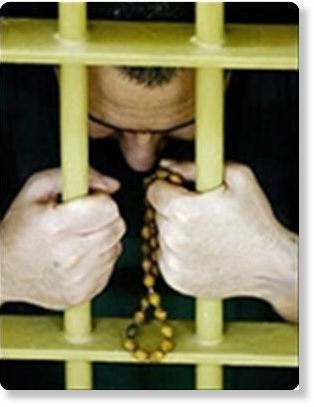
Long, Slow, Cruel: Endless Isolation in Israeli Prisons

With a voice full of hope for a brighter future, and optimism that the end of suffering is near, the prisoner Hasan Salamah repeated songs he has memorized in order to break the routine of a deadly dull life in cramped isolation cells where mercy is unknown and the only smells are those associated with depression, death or insanity.

The prisoner, Salamah, sentenced to several life sentences, has been held in solitary confinement for six years. The occupation authorities have accused him of responsibility for the deaths of scores of Zionists. He is one of more than 100 Palestinian prisoners being held in isolation cells in various sections of Israeli prisons. This isolation may continue for many years so as to drill into the prisoner's mind, body and soul effects which can not be easily erased. The psyche and the body are subjected to ongoing pressure by being deprived of everything, even the simplest conversation with another human being.

Although isolation is a punishment which is supposed to be limited to a specific duration, the occupation has deliberately set no time limits on it so as to crank up the psychological pressure on prisoners. Isolation is periodically extended throughout the period of confinement by means of a kangaroo court known as the Court of Extended Isolation. The prisoner is brought before the court without ever being informed of the reason for his isolation, which is usually based upon a recommendation by the Zionist internal security service, Shin Bet. The prisoner is merely informed that his isolation has been extended on the basis of confidential material. The extension will be for a year if the isolation is partial (i.e., two persons in one cell) and for a period of six months if the prisoner is completely alone in the cell. Throughout this new term the prisoner continues to endure all the forms of suffering he had previously endured until he is brought before a new court in the following year to receive a new extension from the judge for another year for the same reasons (confidential material), and so on, year after year.

Punishment for Leaders!

According to the Ministry of Current and Released Prisoners, in a report on prisoners being held in isolation, the Israeli Department of Corrections imposes the punishment of isolation on those prisoners accused of carrying out major resistance attacks that led to the death of Zionists or on prisoners who are considered leaders of the nationalist movement among the prisoners, whose words carry weight with the other prisoners.

The goal is to humiliate the prisoner, break his will, destroy his psyche, and turn him into a body without a spirit. They are keen to turn him into fertile ground for the spread of debilitating diseases that weaken the bones and impair vision. They want the isolated prisoner to lose both spirit and body, so that he will long for death a thousand times rather than remain stuck within the same walls, talking to himself and counting the hours and days that drag by, waiting to emerge from this dark tomb.

Riyad al-Ashqar, director of the Information Department of the Ministry, explains that isolation is of two types: The first is in individual cells -called snuke- in which a prisoner is held in solitary confinement. These are no bigger than 1.5 × 2 meters, and there is no room to move, walk or pray. There is one mattress, a blanket, one bottle for relieving oneself, and another for drinking water. The prisoner is only allowed to go to the bathroom once a day.

In these cells prisoners lose all sense of time; they do not know the times of prayer or even when day turns to night. They are not allowed to have watches, radios, newspapers, or any means of communication with the outside world, nor are they permitted to purchase anything from the prison canteen.

The second type of isolation is in a wing of the prison completely devoted to isolation cells. The cells in these sections are slightly better than snuke, and are large enough to house more than one prisoner. They have a toilet inside each cell, and prisoners are allowed to prepare food inside the cell.

The Prisoners Subjected to the Greatest Isolation

Al-Ashqar explained that the number of prisoners being held in isolation is more than 100 prisoners in various prisons, with some being held in solitary confinement within the isolation wings of the prisons of Askalan, Ramla, Ayalon, Nafha and Beer Sheba. There are a number of prisoners who have been singled out by the prison management for punishment by isolation on a continuous basis. They are:
  • Hasan Salamah, from the city of Khan Younis, has been sentenced to dozens of life sentences. So far he has spent six years in isolation.

  • Hamid Ibrahim, from Silwad, has been sentenced to dozens of life sentences. He has been held in isolation ever since his initial arrest more than three years ago.

  • Mahmoud Eesa, from Jerusalem, has been sentenced to several life sentences. So far he has spent eight years in isolation.

  • Tayseer Samoudi, from Yamoun, has spent more than 14 years being shifted from one isolation cell to another.

  • Mu'taz Hijazi, from Jerusalem, was sentenced to 11 years. So far he has spent six years in isolation.

  • Abd al-Naser Halees has spent more than ten years so far in isolation.

  • Jamal Abu Haija of Jenin, has been sentenced to several life sentences. So far he has spent four years in isolation.

  • Abdullah al-Barghouthi, of Ramallah, has been sentenced to dozens of life sentences. So far he has spent five years in isolation.

  • Ahmed al-Maghrabi, from Bethlehem, has been sentenced to several life sentences. So far he has spent five years in isolation.

  • Mohammed Jamal Natsheh, from Hebron; a member of a Legislative Council, he was sentenced to eight years. He has spent five years in isolation.

  • Uwaydah Kallab from the Gaza Strip, was condemned to life imprisonment. He has stayed more than ten years in isolation.

  • Hisham Sharbati was sentenced to eight years; he has spent three years in isolation.

  • Zaher Jabareen, from Hebron, was sentenced to life imprisonment. He has been isolated more than once; the longest period was for two years.

  • Musa Dudeen, from Hebron, was sentenced to life imprisonment and has been subjected to isolation more than six times.

  • Mahawish Nu'aymat of Rafah has spent more than a year in isolation since his arrest.

  • Mohammed Jaber Ubaydi, of the town of Kafr Ni'ma, has spent four years in isolation.

  • Usamah al-Ainabusi of the town of Tubas.

  • Saleh Dar Musa from the town of Bayt Luqya.

  • Jihad Yaghmour of Jerusalem.

Suffering without Limits

Al-Ashqar identified a number of forms of suffering endured by prisoners confined in isolation cells. Among the most serious is being confined in sections that house common criminals; there they are subjected to every form of abuse, curses, and having flammable liquids thrown at them. They are also subjected to a steady assault on their religious sentiments and continued harassment by loud music, constant drumming on their doors and being repeatedly subjected to prisoner counts at short intervals.

Prisoners are not allowed to go out to the exercise "yard" except one hour a day, and the guards manipulate the timing of that hour so that on bitterly cold days they come at six in the morning to announce that anyone who wants to exercise must wake up. If one prisoner wants to sleep and the other wants to go out, the one who stays must wake up to have manacles placed on his hands so that the other can go out. If he doesn't wake up, the other will be deprived of the opportunity to go out in the yard. If they both want to go out, manacles are put on both, and they go out one by one. Frequently one of them will be required to remain out in the yard in manacles. Worse still, manacles are a feature of all the details of daily life. Prisoners are handcuffed when the trash is taken out, when receiving visits from lawyers or family members, and when going out to the clinic or the court. The prisoner will be placed on the examination bed and made to lie with his hands under his back. Prisoners are even forced to give urine samples in a most humiliating way while manacled.

The prisoner in isolation is imposed upon in all aspects of life. The prison administration may, for instance, require one prisoner to be paired off with another in cells that are usually cramped and poorly ventilated. The administration will deliberately pair a non-smoker with a smoker or a religious prisoner with a non-religious one to set the prisoners up for 24-hours-a-day of conflict. If one of them tries to protest or get a transfer away from the other, the solution is blows and truncheons. They are forced to live together, and if they refuse, all their personal belongings are confiscated and the cell is converted to a snuke or torture chamber stripped of all personal belongings. More than once the brothers are told, "One of you could get rid of the other by having the other one die."

A prisoner is subjected to the severest penalties if he reads the Qur'an aloud, or breaks anything inadvertently, or speaks with another prisoner in the section. If a piece of metal, wire or string tied for some particular purpose is found in a cell, all electrical devices will be removed from it and the prisoner will be denied access to the canteen and the daily exercise outing. As for visits from family members, these are already prohibited, except in rare cases.

In addition, there are sudden raids in the middle of the night by a special unit wearing masks and equipped with video cameras. They conduct violent searches in which the prisoner is stripped naked for no reason and handcuffed while his personal belongings are broken and trifled with and the room is turned upside down. After the inspection is completed, the door is locked and the prisoner sticks his hands through a large hole in the bottom of the door to have the handcuffs removed. For two or three days after an inspection a prisoner will work to restore order to his room, only to have the same procedure repeated a few days later.

If a prisoner in isolation is afflicted by any health ailment he will have to go through a complicated set of procedures before being able to see a doctor. He will have to register for the clinic several times. Often the isolation section will have a specific day of the week set aside when those prisoners are allowed to go out for clinic visits. If the day is Monday, for example, and the prisoner gets sick on Tuesday, he will have to wait the whole week before being allowed to go to the clinic. If the officer assigned to take him happens to be busy or has the day off, he loses his chance and has to wait for another week. When he does finally get to the clinic he will remain handcuffed during the examination and forced to listen to insults from the doctor and the nurse. If blood tests or imaging are necessary, he will have to wait for months, if he ever gets one.

Isolation wings tend to be unhealthy places with poor ventilation and poor hygiene; rats run on the food, and the rooms are filled with cockroaches and mosquitoes. Worst of all, the daily exercise yard is no more than a room 5 meters longs by 4 meters wide with a cement roof. It gets no sun, and it is not possible to use it for exercise or even a walk, it being frequently filled with the leftovers of the common criminals, such as urine, feces and other filth.

Prisoners in isolation are denied all religious rights such as holidays, Friday prayers, even religious books. A prisoner may even sometimes have his prayer rug taken away. They are, likewise, deprived of family visits and of newspapers.

Psychological effects

The report pointed out that isolation leaves great psychological effects on a prisoner. For years on end he does not see anyone; he is either entirely alone or with one other person, but the two of them cannot mingle with other people. He is subjected to all forms of psychological torture and deprivation, and then when he shows some signs of protest or of being affected by his situation, he is accused of being suicidal. Force is immediately brought to bear; his hands and feet are bound fast to a high iron "perch" on which he sleeps. He is set free only twice a day for half an hour each in the morning and evening to eat and go to the bathroom.

Many international human rights organizations have confirmed that isolation leaves clear, striking psychological effects on prisoners. Some prisoners go insane as a result of isolation from the world for long periods, for humans are by nature social beings; they need to talk with others. Should a person be forcibly deprived of expression of this natural instinct, he will be vulnerable to serious mental illnesses that will affect the course of his life.

The prisoner Uwaydah Kallab from the Gaza Strip was sentenced to life imprisonment and has spent 20 years in Israeli prisons, during which he has been isolated for more than 12 years. This has led to serious mental illness and the loss of mental and legal competence. It has resulted in his inability to recognize his friends in prison. He refuses the visits of his relatives, and he refuses to acknowledge his only son, who was a young child when Uwaydah was taken away and is now a young man.

Afeef Awawidah is suffering a serious psychiatric illness caused by isolation for long periods. The prison administration attempted to exploit the prisoner's disease by goading him to attack one of his colleagues in isolation. The prisoner Darwish Dawhal is also suffering from a psychological and neurological condition as a result of solitary confinement; he does not wish to talk with anyone or come out of his cell for the daily exercise session.

There are many other prisoners who are suffering from depression and mental illness as a result of isolation from the world for long periods. The situation calls for a serious stand to stop this criminal policy against the prisoners, which is in contravention of humanitarian conventions. The ministry is calling for immediate intervention by international institutions to curb the Israeli policy of punishing our male and female prisoners by isolation, and to improve the living conditions in prisons to bring them in line with the requirements of international law. They need to do that before they make demands of the Palestinians to release Corporal Gilad Shalit or allow him a visit by the Red Cross.

Wednesday, May 27, 2009

Time for US to stop fueling the conflict

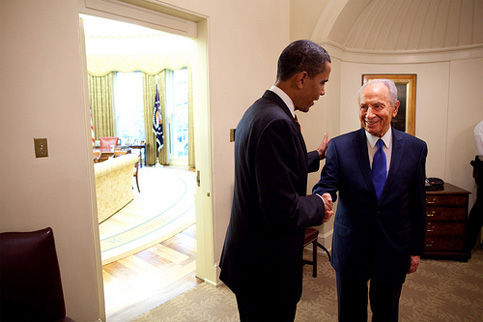
Obama Peres
© Pete Souza/White House Photo
Seen in the Oval Office with Israeli President Shimon Peres in May 2009, US President Barack Obama requested $2.775 billion in military aid to Israel

In pledging to trim ineffective spending, US President Obama declared that "there will be no sacred cows and no pet projects. All across America, families are making hard choices, and it's time their government did the same."

By asking earlier this month for $2.775 billion in military aid to Israel in his FY2010 budget request, it would seem that on this important policy issue President Obama's commitment is more rhetorical than substantive. Since 1949, according to the Congressional Research Service, the United States has provided to Israel more than $100 billion in military and economic assistance. In 2007, the US and Israel signed an agreement for $30 billion in additional military aid through FY2018.

Yet the provision of US weapons to Israel at taxpayer expense has done nothing to bring Israelis and Palestinians closer to achieving a just and lasting peace. Rather, these weapons have had the exact opposite effect, as documented recently by Amnesty International, which pointed to US weapons as a prime factor "fueling" the Israeli-Palestinian conflict.

According to the Israeli human rights group B'Tselem and the Palestinian Centre for Human Rights, during the Bush Administration, Israel killed more than 3,000 innocent Palestinian civilians, including more than 1,000 children. During its December 2008-January 2009 war on the occupied Gaza Strip alone, Israel killed nearly 1,200 non-combatants.

On average, for each day that President Bush sat in the Oval Office, Israel killed one Palestinian civilian, often with US weapons. Before Congress appropriates any additional military aid to Israel, it should insist upon President Obama providing a comprehensive and transparent review of the effects US weapons transfers to Israel have on Palestinian civilians. The Arms Export Control Act limits the use of US weapons given to a foreign country to "internal security" and "legitimate self-defense."

If, after reviewing the impact of Israel's misuse of US weapons, the President and Congress cannot find the political will to sanction Israel for its violations of the Arms Export Control Act and prohibit future arms transfers as is required by law, then there are still steps that the US government should take to ensure that any future transfers are not used to commit human rights abuses but instead to promote US policy goals. For example, previous US loan guarantees to Israel have stipulated that funds cannot be used to support Israeli activities in the Occupied Palestinian Territories. Conditioning US military aid to Israel in the same way would prevent these weapons from being used to kill innocent Palestinian civilians.

As President Obama has stated, "We can't sustain a system that bleeds billions of taxpayer dollars, on programs that have outlived their usefulness or exist solely because of the power of politicians, lobbyists or interest groups. We simply can't afford it." In regard to US aid to Israel, this is true as much from a budgetary standpoint as it is from a moral one.

Josh Ruebner is the National Advocacy Director of the US Campaign to End the Israeli Occupation. This essay was originally published by the Detroit Free Press.

Thursday, April 30, 2009

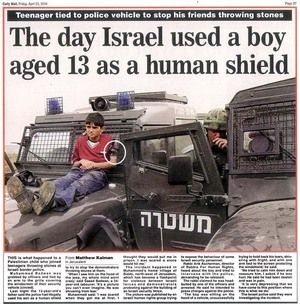
Israeli Use of Palestinians As Human Shields

As to the accusations of Hamas using Palestinians as shields in Gaza, where are 1.5 million people supposed to go in a postage stamp of a prison 10 miles long and 3 miles wide? It's called living in one's "home", if that's what that miserable Israeli-created ghetto can be called.

Blue Ibis
************************************************************
human shield
© unknown

The Al Mezan Center for Human Rights is a Gaza-based Palestinian NGO mandated "to promote, protect and prevent violations of human rights in general, and economic, social and cultural rights in particular, to provide effective aid to those victims of such violations, and to enhance the quality of life of the community in (Gaza's) marginalized sectors."

It monitors and documents violations, provides legal aid and advocacy, and helps Gazans on "fundamental issues such as basic human rights, democracy, and international humanitarian" matters. It also produces reports and publications on its work.

In April, it published a seven-case study update of its July 2008 report titled: "Hiding Behind Civilians - The Continued Use of Palestinian Civilians as Human Shields by the Israeli Occupation Forces." This article reviews both reports to highlight what international law unequivocally prohibits. Nonetheless, it's customary IDF practice even though Israel's Supreme Court banned it on October 6, 2005.

One Palestinian woman described her experience:
They handcuffed and blindfolded me. Then, they forced us to move out of the room, pushing me with their hands and guns to move although I was blindfolded and pregnant. I heard them pushing others to hurry up as well. I got exhausted and fell down many times. I told them that I was four months pregnant and couldn't continue but a soldier threatened to shoot me.
Other witness testimonies related similar stories, at times with tragic consequences for its victims. Israel is a party to various human rights laws and conventions. As a result, it's obligated to respect and protect the rights of people it controls.

Under Article 3 of the UN General Assembly's 1948 Universal Declaration of Human Rights (UDHR): "everyone has the right to life, liberty and security of person."

Under Article 5: "no one shall be subjected to torture or to cruel, inhuman or degrading treatment or punishment."

Under Article 9: "no one shall be subjected to arbitrary arrest, detention or exile."

The General Assembly's 1977 International Covenant on Civil and Political Rights (ICCPR) affirms the same rights. Under Article 17: "no one shall be subjected to arbitrary or unlawful interference with his privacy, family, home or correspondence."

Both international humanitarian law (IHL) and international human rights law (IHRL) protect life, well-being and dignity. ILH deals with armed conflicts while IHRL applies to peace as well as war. Hague and Geneva Conventions comprise the main body of IHL, and strike a balance between military necessity and humanitarian considerations. As an occupying power, Israel is obligated under them.

Fourth Geneva protects civilians in war time, including those in Occupied Palestine. It restricts the use of force and prohibits seizing non-combatants as hostages, including persons who've laid down their arms or can't fight because of illness, injury or any other reason.

Article 34 states: "the taking of hostages is prohibited." Article 28 states: "the presence of a protected person may not be used to render certain points or areas immune from military operations." Article 29 states: "the Party to the conflict in whose hands protected persons may be, is responsible for the treatment accorded to them by its agents, irrespective of any individual responsibility which may be incurred."

Protocol I, Article 51, paragraph 7 states: "the presence or movements of the civilian population or individual civilians shall not be used to render certain points or areas immune from military operations, in particular in attempts to shield military objectives from attacks or to shield, favor or impede military operations." In other words, using civilians as human shields is prohibited under all circumstances.

Further, the International Criminal Court's (ICC) Rome Statute, Article 8 prohibits the "Taking of hostages." Israel isn't a Court member but is obligated under international law. Nonetheless, it flaunts it with impunity.

Al Mezan collected sworn testimonies of people's homes seized and used as military posts for days with their residents confined for prolonged periods, beaten and abused, prevented from normal activities, and put in harm's way.

Another practice was called the "neighbor procedure," later changed to "the prior warning procedure" to get around a Court prohibition. Israel commandeers civilians, has them knock on neighbors' doors, usually at night, to deliver military orders to submit to arrest. Hostages are put in harm's way when violence at times erupts that may result in deaths or injuries.

Finally the practice was banned, but Israel blatantly disregarded its own High Court ruling as well as its clear obligation under IHL. It continues to use civilian men, women and children as human shields.

During the Second Intifada (especially for Israel's large-scale West Bank Operation Defensive Shield incursion), Amnesty International (AI) said the following in October 2005:
[AI] investigated tens of cases where the Israeli army used Palestinians, children as well as adults, as 'human shields' during military operations in towns and refugee camps throughout the Occupied Territories. Palestinians were forced to walk in front of Israeli soldiers who, at times, fired their weapons while shielding themselves behind the civilians. As well (they) were made to enter houses ahead of Israeli soldiers to check for explosives or gunmen hiding inside, to inspect suspicious objects, to stay in their houses when Israeli soldiers took them over to use as sniper positions, or to enter the houses of wanted, possibly armed, Palestinians to tell them to surrender to Israeli forces.
B'Tselem reports that Israel routinely uses "human shields (as) an integral part of the orders received by Israeli soldiers...." Al Mezan documented "dozens of cases" in Gaza in spite of specific High Court prohibitions, usually at times of incursions. Case studies below refute Israeli claims about respecting civilians, not using them as shields, and abiding strictly according to international and its own case law.

Israeli officials lie. As standard practice, they seize Palestinian civilians randomly, including women and young children, then force them into harm's way. Usually to:

-- let soldiers commandeer their homes as military posts and for sniper positions;

-- check for possible booby-traps in buildings;

-- order occupants inside to leave;

-- remove suspicious objects anywhere soldiers may go;

-- shield them from gunfire or thrown rocks; and

-- perform whatever other tasks soldiers order under very real threats they'll be shot if they refuse.

Orders to conduct these practices come from top commanders, not soldiers in the field.

Case Study Examples - 2008 and 2009

Number 1

On July 10, 2008, the IDF forced Rana Mofeed Awad An-Nabaheen, age 11, to visit a relative's house delivering orders to leave. On return, she was shot in the stomach by other soldiers, unaware she was acting under orders. Family member Mahir Hamdan Mheisin An-Nabaheen provided eyewitness sworn testimony. At about 4:30AM, vehicles, helicopters and gunfire woke him.

"I peeked through a window and saw Israeli soldiers breaking into my family member's house and forcing them to get out." Rana delivered orders to leave. He then heard heavy gunfire. "I peeked out and saw Rana near the gate screaming and saying: 'I am injured.' I stepped back into the house and gave her my hand....I pulled her back into the house. The gunfire became heavier. I left Rana bleeding and took cover behind a wall. Rana crawled two steps and lay on the floor....I saw her entrails coming out of her abdomen.
A physician in military uniform came, brought a bandage, and put it on her abdomen. The commander fastened Rana to a carrier, then ordered two soldiers to carry her." This case is typical of many others.

Number 2

It involves the arrest of civilians, including a pregnant woman, from the As-Sreij neighborhood in eastern Al-Qarara village in Khan Younis. They were held in an agricultural field and forced to accompany soldiers towards the separation border. The men were detained, women and children ordered to leave. They were shot at en route, then used as human shields during the operation. Out of fear of reprisals, the witness remained anonymous.

On April 3, 2008, at 7:30AM, her husband wasn't answering his mobile at the time an Israeli force entered the area where he was working. She rushed there with his ID card. "When I was on my way, I heard somebody shouting and ordering me to stop and come towards him....I tried to explain that I had come to give my husband his ID card but they threatened to shoot me."

"They led me to a room where I saw seven men and a woman with her two daughters, who were detained. The men were handcuffed and blindfolded. They handcuffed and blindfolded me. Then, they forced us to move out of the room, pushing me with their hands and guns although I was blindfolded and pregnant....They stopped for a while and took off my blindfold....I saw them taking the men across the border, and then heard one of them ordering us to leave the area....I heard heavy gunfire."

"I had to crawl for a long time to leave the area....I found (soldiers) who forced me to stop. I tried to explain what happened but they threatened to shoot me and forced me to sit down with a child of (a) family....One soldier forced the child to take his shirt off and tied his hands with it. There were many explosions and intensive firing."

"I managed to go home at around 13:00 on the same day. My husband returned home at around 21:00 on the same day. I knew he was detained in a military post close to the border line."

This is another human shield example that "demonstrates the complete disregard of the soldiers for the life of a pregnant woman and her unborn child." They were used as cover for Israeli forces to withdraw from the area.

Other cases were of medical teams forced to carry out life-threatening tasks, homes used as military posts and their residents as human shields, and a 14 year old boy used for the same purpose.

On April 9, 2009, Al Mezan presented an updated report, containing seven new case studies "based on comprehensive field investigations and witness statements," these based on incidents during Operation Cast Lead and one earlier in 2008.

"In endangering the lives of civilian men, women and children through systematically using them as human shields, the (IDF committed) crimes against humanity according to IHL." This is one of many violations against non-combatant Palestinian civilians.

Number 1: 15-year-old child used as a human shield

After being used for that purpose, the child was detained in a hole in the ground with about 100 others for four days. He now suffers from serious mental health difficulties and refuses to speak to strangers. With help from his parents, Al Mezan got him to tell his story and presented excepts from it below. At home with his parents, he was terrified by days of conflict.

"I was lying on the floor sheltering with my mother." His uncle then said: 'Come downstairs.' "So we all went downstairs. As soon as we opened the door, I saw a large number of soldiers. One of them was pointing his weapon at me....I saw my uncle and brothers lined up against the wall. I saw the soldier signaling at me to stand beside them. So I did....he wanted me to put my hands up. So I did. Another soldier came and searched me from top to bottom....He tied my hands to the hands of the people next to me."

"I stood by the wall. A few minutes later one of the soldiers came and kicked me. About two hours later, they ordered us to walk....they made us go into Khalil al-Attar's house....Then they told us all go, as a chain, into one of the rooms." They took us outside the house....I heard the sound of a huge explosion in the area. From there they took us to a farm."

"They made us sit on the ground until dawn the following day. Then they took us outside the field (and) blindfolded my eyes....they led us to a low-lying area. They made us sit on the ground....They tied my hands in front of my stomach. They searched me a third time and made me sit on the ground....After they took of my blindfold....I realized where the low-lying area was. It was a hole made by Israeli forces....south of the American school."

"We spent the whole night in this hole. I couldn't sleep. The weather was really cold and I wasn't wearing a lot of clothing. We stayed in this hole for four days....I could hear the sound of shooting and explosions" close by. We got one meal each afternoon...."On the third day I saw a soldier making a wire fence around the hole (and bring) a lot of people to the hole until the number reached around 100. On the morning of the fourth day, an Israeli soldier untied me, my brother Ali, my cousins Hussein and Khalil. They told us and the women to go to Jabalia.

Case 2: Majdi al-Abed Ahmed Abed Rabbo, male, age 40

On January 5 at 9:30AM, he was at home when he heard a loud sound and someone say, "Open the door....I arrived at the door and opened it. I was surprised to see an (IDF) soldier hiding behind a man in his twenties and pointing a gun at me. He said in Arabic, 'Take off your pants.' I took" them off. He ordered him to strip naked, then get dressed. About "15 - 20 Israeli soldiers then entered the courtyard of my house....one grabbed my neck from behind and put his gun to the back of my head."

"Two other soldiers hid behind me....They told me to lead them to the roof, where they searched pigeon coups that I keep in two rooms there." A soldier then asked about the adjacent house, belonging to his cousin and connected to his home by a common roof. "There's no space between the two houses, just the wall."

"After that, one of the soldiers brought a demolition tool and said, 'Drill a hole there.'....Then three soldiers went through the hole to (his cousin's) house." He was told to come as well along with more soldiers, then told, "Get up. Get up," and grabbed violently. "I got up and entered with them through the hole back to my roof, and they all went as a group down the stairs. This happened quickly....The whole group was running."

"The soldiers led me outside. I found myself in a mud road....One of the soldiers was holding me and making me run with him. Another soldier was bringing the young man with him the same way, and (he) had his hands tied. They pushed me in the mosque through its main door to the north....They tied my hands in front of my stomach and tied my legs and sat me down (in one corner). We entered the house adjacent to the mosque. They took us out and turned us toward another house," then sat us down nearby.

In one house, a soldier said, there were gunmen and we killed them. "Go take their clothes off and bring their guns and come back."

"I refused. I asked him to let me return to my family. I said to him:" going into that house "means death, and I don't want to die." The soldier responded, 'You are here to do what we tell you (and said) Go.'

"I walked about 200 meters to the house....I went in...I went alone....but couldn't find anyone. I expected the worst." He encountered three armed men wearing badges saying Al Qassam Brigades. He said he was forced to come. They told him to go back and say what he saw - "three gunmen in the house, still alive....then the soldier said to me, 'The officer says he's crazy and if you are lying to him he swears by his mother he will shoot you."

"A short time later, I heard the sound of heavy gunfire nearby. Twenty minutes passed....and a soldier said to me; 'We killed them now. Go get them.' I refused. I told them that they had told me that if I returned they would kill me, and he shouted at me: 'We killed them.' "

He went again and found one man seriously injured and bleeding and the others alive. He reported back what he saw, then heard heavy gunfire and a very loud explosion. A soldier said; 'Go and make sure they are dead. We bombed the house again with planes...."With difficulty, I entered the apartment. Inside, I saw the three men still living, but they were under the rubble."

Majdi al-Abed Ahmed Abed Rabbo located his wife and children after the IDF released him. His home was totally destroyed by military bulldozers, and he's deeply distressed. Numerous other examples are similar to his account - human shields illegally used by IDF soldiers in violation of international law and Israel's High Court ruling.

Conclusions

The above cases are examples of customary Israeli practice in gross violation of international law and Israel's High Court ruling. They endanger civilian lives and cause "long-lasting psychological trauma."

IHL considers using civilian human shields a war crime and when used systematically against non-combatants a crime against humanity. It's essential to hold parties guilty of these crimes accountable as the way to stop this heinous practice.

Al Mezan condemns Israel's disregard for the law and says that "the continued failure of the international community to fulfill its obligations and its silence on Israeli violations encourages" similar acts in the future - by Israel and others engaged in this outrageous practice.

Stephen Lendman is a Research Associate of the Centre for Research on Globalization. He lives in Chicago and can be reached at lendmanstephen@sbcglobal.net.

Saturday, January 03, 2009

Will AP Stop at Nothing to Push for War on Iran?

Will AP Stop at Nothing to Push for War on Iran?

On December 28 - the day after the Israeli carpet-bombing of the 1.5 million impoverished and imprisoned Palestinians of Gaza began - Iran's supreme leader, Ayatollah Ali Khamenei, issued a religious decree stating that those who die while defending Palestinians against Israeli aggression in Gaza will be considered martyrs.

Since then, thousands have reportedly volunteered, and on December 30, the Iranian daily, Payvand News, released a news brief titled "Students ready to launch 'Esteshhadi' operations in Gaza," reporting thus:

A large number of students from various universities of Iran on Tuesday voiced their readiness to launch Esteshhadi (martyrdom-seeking) operations in Gaza.

In separate phone calls to IRNA, students from universities of Tehran, Mashhad and Kerman announced their readiness to undertake operations in defense of the people of Gaza.
So according to a Persian source, the Persian term those students are using - Esteshhadi - translates to "martyrdom-seeking." And their actions are reportedly "in defense of the people of Gaza."

AP, on the other hand, translates it only slightly differently. This morning's AP headline on the story is titled "Volunteer suicide bombers seek to attack Israel" [1]; its lede goes thus:
Hard-line Iranian student groups have appealed to the government to authorize volunteer suicide bombers to leave Iran and fight against Israel in response to the Israeli assault on the Gaza Strip. . . .

Five hard-line student groups and a conservative clerical group launched a registration drive on Monday, seeking volunteers to carry out suicide attacks against Israel.
Now, that is how you get people's attention, from the headline to the lede, and if you're a really good compiler-editor, your readers will be salivating for the juicy bits in the ensuing dialogue:
"Volunteer student suicide groups ... are determined to go to Gaza. You are expected to issue orders to the relevant authorities in order to pave the way for such action," the students advised Ahmadinejad in an open letter, a copy of which was made available to The Associated Press on Wednesday.
(Yes. They were "made available," and no doubt subsequently translated to the liking of AP's settler-editors at the W. Jerusalem bureau, as well as the IDF and the Hasbaranik groups that practically edit for them.)

Now let's recap.

- Ayatollah Khamenei called the missions voluntary defense of the people of Gaza against Israeli aggression; the reward upon death being martyrdom.

- Payvand News gave us the actual term (Esteshhadi) students are using to describe the act of dying while defending Palestinians against Israeli aggression, along with the correct translation according to Muslim faith: martyrdom-seeking.

- AP calls it by its typical war-on-terror name: suicide bombings (and "attacks" on "Israel"), even though, as far as both AP's and Payvand's readers know, the students said NOTHING about bombs or particular acts of violence. And of course, those students are "hard-line": a designation given by AP to practically anyone (but especially a Muslim or an Arab), who staunchly opposes Israeli and U.S. policies in the region. (Perhaps Ghandi and Mother Teresa are "hard-line" too.)

This is ridiculous enough, what with the obvious sensationalism typically employed by "the world's most trusted source of news and information"; but consider the following.

ANY mission wherein an Arab or Persian Muslim - or really, anyone - goes into Gaza, seeking to defend Palestinians against practically indomitable Israeli aggression, will have about a 1-in-100 chance of coming out alive. AP can very well refer to this as "suicide"; but the fact is, even in Christian tradition, when someone dies in the service of God - and particularly, in defense of the weak, defenseless, and oppressed - it is NOT considered SUICIDE. It is MARTYRDOM. There is honor and holiness in martyrdom, while there is shame and blasphemy in suicide.

AP's selective, sensationalistic, and obviously agenda-inspired use of the "translation" - suicide bombing - is no better than referring to the Israeli Army's practice of putting Druze and Christian soldiers on the frontlines as blood libel. In the very least, it shows a lack of professionalism, honesty, and objectivity on AP's part; at most, it is a disgusting, politically-motivated, collectivist attack on several billion humans of the world and their faith.

Now, if that wasn't enough deception and collectivist defamation to get the war drums pounding, don't worry: the editor threw in a nasty use of scare quotes, as well as AP's favorite and most-prolific bald-faced, anti-Iranian lie:
In a speech Tuesday, Ahmadinejad called for the trial of Israeli leaders on charges of massacring Palestinians in Gaza. His comments come a day after Iran's judiciary set up a court to try Israeli leaders for such "crimes." [Using double quotes on only the word crimes is done for no other reason than for the AP editor to tell us, "Crimes? Ah ha ha ha ha!" -dt]

Iran considers Israel its archenemy and Ahmadinejad has repeatedly called for Israel to be "wiped off the map." [See the accurate translation of Ahmadinejad's statement, here, and proof of AP's intention to keep lying about it, here. -dt] Iran also is Hamas' main backer, though Tehran denies sending weapons to the Islamic militant Palestinian group that took control of the Gaza Strip in June 2007.
And of course, just in case we forget whom the bad guys are, the Israeli military-state is just "Israel"; while its Palestinian counterparts are always modified with several adjectives and adverbs because, after all, it's bad to be Muslim and violently defend yourself, your people, and others against the wanton aggression of the Almighty States.

Monday, December 29, 2008

Mangled bodies, wailing relatives at Gaza hospital

Mangled bodies, wailing relatives at Gaza hospital
Palestinian wounded
© AFP
A Palestinian is rushed to hospital after he was wounded in an Israeli air strike on Gaza City
Relatives wail as the mangled bodies of loved ones are brought into Gaza's Al-Shifa hospital on Saturday following Israeli air strikes that killed nearly 200 people in the Palestinian enclave.

Ambulances and private cars rush those wounded or killed in the punishing raids to the hospital, where staff use sheets as makeshift stretchers.

In some cases, a single stretcher is used to carry several bodies. Torn limbs fall to the blood-soiled floor.

There is no space left in the morgue and bodies are piled up in the emergency room and in the corridors, while many of the severely wounded scream in pain.


Overworked doctors and nurses can only deal with the most pressing cases.

Most of the victims wear the uniforms of the security services of Hamas, the Islamist movement that runs Gaza and whose installations were targeted in the attacks Israel says were in response to rocket attacks by Gaza militants.

Morgue employees use megaphones to ask parents who throng the entrance to identify their loved ones and take the bodies for burial.

"My brother was still alive when he arrived here, and was talking to me but no one could help him. He died," said Ahmed al-Gharabli, his voice shaking and tears streaming down his cheeks. His brother Baha was a Hamas policeman.

The bloodied body of another policeman, Mohammed Abu Shaaban, is carried on the same stretcher as that of a girl aged about 10 who was hit in the stomach.

Abu Obeida al-Jarah, a police commander who was inside one of the buildings targeted by the Israeli bombs, escaped unharmed.

"We managed to get out and immediately came here to identify the bodies," he said.

"It is truly a massacre and it will not go unpunished. The blood of policemen cannot be unavenged."

The health minister in the Hamas government, Bassem Naim, worried about the dire lack of resources to deal with the large number of victims.

"Our means are too modest to respond to this terrible massacre," he told AFP.

At the best of times the health sector is stretched to the limit in this impoverished and overcrowded enclave that has been the subject of crippling sanctions since Hamas seized power in June 2007

Barefoot, her headscarf dropped on her shoulders, Asmaa Abdo rushed to the hospital immediately after the raids to inquire about the fate of her two sons, who are training to become policemen.

"I was told my sons are both dead but nobody at the hospital can tell me whether that is true," she cries, shouting insults at moderate Palestinian president Mahmud Abbas and Arab states she feels failed to do anything to protect Gaza.

Abbas' forces were ousted from Gaza in the Hamas takeover.

Near the hospital, a mountain of rubble marks the spot where a 10-storey building that housed a Hamas prisoner support association once stood. Bulldozers clear the ruins as rescuers continue a grim search that has already turned up five bodies, all torn to pieces.

Verses from the Koran, the Muslim holy book, echo across the streets, broadcast from the minarets of the city's mosques. Women in tears head to the hospital.

Al-Aqsa, the Hamas television station, broadcasts images of mangled, bloodied bodies lying on the ground. A message on the screen proclaims: "The Holocaust continues" and the anchorman denounces what he calls the silence and the complicity of some Arab countries.

Comment: ... the silence and the complicity of the whole world - for decades now!